Rotary Vane vs Monoblock Vacuum Pumps: Production Line Comparison
Table of Contents
- Rotary Vane vs Monoblock Vacuum Pump Comparison
- How Does a Rotary Vane Vacuum Pump Work and Which Applications Is It Suitable For?
- Why Does a Monoblock Vacuum Pump Offer a More Compact and Efficient Solution?
- What Are the Fundamental Technical Differences Between the Two Technologies?
- How Is Performance and Durability Evaluated in Rotary Vane Pumps?
- Why Is Energy Efficiency Higher in Monoblock Vacuum Pumps?
- How Do Maintenance Requirements Differ Between Rotary Vane and Monoblock Models?
- How Does the Performance Difference Appear on the Production Line?
- Which Model Is More Economical in Terms of Energy Efficiency?
- Beyond Maintenance and Energy: Why Is TCO Comparison Crucial?
- Which Model Is More Suitable for Specific Production Lines?
- From an Engineering Perspective: Which Model Is More Strategic?
Rotary Vane vs Monoblock Vacuum Pump Comparison
The rotary vane vacuum pump and the monoblock vacuum pump stand out as the two most preferred vacuum technologies in modern production lines. Both models deliver strong performance in industrial applications, yet they exhibit clear differences in terms of process characteristics, system infrastructure, energy requirements, automation setup, and maintenance culture. When planning a factory-scale vacuum system investment, the chosen pump type affects not only immediate technical needs but also the company’s long-term energy costs, maintenance budget, and production continuity. Therefore, the decision-making process should be based on engineering analysis and cost-performance evaluation rather than a quick selection from catalog data.
In industrial manufacturing, vacuum pump selection often follows the habit of “the model we’ve always used.” However, as processes evolve, energy prices rise, and sustainability goals gain importance, the suitability of old choices becomes questionable. The rotary vane design is renowned for its durability under heavy-duty conditions, while the monoblock design excels with its compact body structure and more balanced energy distribution. When parameters such as required vacuum level, flow rate range, activation frequency, ambient temperature, and noise limits are considered, different advantage scenarios emerge for each technology.
In the following sections, the operating principles, performance behavior, maintenance requirements, energy consumption, and total cost of ownership of rotary vane and monoblock vacuum pumps are examined in detail from an engineering perspective. The goal is to enable purchasing decisions to be made not solely based on initial price, but together with technical data, real-world scenarios, and long-term operational impacts.
How Does a Rotary Vane Vacuum Pump Work and Which Applications Is It Suitable For?
Known also as rotary vane vacuum pumps, vane pumps operate on the principle of compressing air or gas using an eccentrically positioned rotor inside a cylindrical housing and vanes that slide in and out of rotor slots. As the rotor turns, centrifugal force pushes the vanes outward, changing the internal volume to create suction and compression stages. This mechanism provides a highly stable pressure curve and is reliably used across a wide range of industrial processes. It offers a structure capable of maintaining flow and pressure balance for long periods, especially in lines requiring medium vacuum levels.
Rotary vane vacuum pumps are frequently preferred in food packaging processes, thermoforming machines, plastic forming applications, CNC workpiece clamping systems, and chemical process lines. In these areas, stable vacuum in continuously running machines is part of product quality. For example, incomplete packaging in the food industry, missing mold details in plastic vacuum forming, or workpiece movement on CNC tables are direct results of vacuum instability. The vane design is highly successful in providing constant vacuum level despite process variables.
From a technical standpoint, rotary vane pumps draw attention with high starting torque, wide flow range, and long-term stability when properly maintained. The oil-lubricated operating principle protects sealing surfaces and supports the rotor-vane assembly with proper oil films. However, if maintenance routines are neglected, oil contamination, vane wear, and increased internal friction can lead to performance loss. Thus, rotary vane pumps are an extremely compatible solution for facilities with established maintenance discipline, high production tempo, and operation in the medium vacuum range.
Why Does a Monoblock Vacuum Pump Offer a More Compact and Efficient Solution?
In the monoblock vacuum pump design, the motor and pump body are integrated into a single unit. This integration provides significant advantages both in mechanical strength and space utilization. The compact body structure facilitates the installation of vacuum stations in tight spaces, while fewer connection points mean additional sealing reliability. Vibration is distributed more evenly due to the monolithic construction, reducing both noise and fatigue on connecting elements.
Single-stage monoblock vacuum solutions stand out with both energy consumption and maintenance ease in lines requiring medium vacuum. Two-stage monoblock configurations are preferred in precision processes targeting lower pressure levels. In both configurations, body integrity ensures more controlled heat distribution. Since the heat-generating motor and compression zone are balanced within the same design, stresses caused by temperature differences are minimized.
Monoblock pump technology is highly compatible with compact and modular installation strategies in new-generation factories. In central stations where multiple pumps are placed side by side, the small footprint simplifies ventilation design, cabling layout, and maintenance access. The lightweight and compact design also reduces the need for lifting equipment during installation. In facilities where energy efficiency is prioritized, noise limits are strictly defined, and maintenance teams are limited, the monoblock vacuum pump becomes a highly advantageous engineering choice.
What Are the Fundamental Technical Differences Between the Two Technologies?
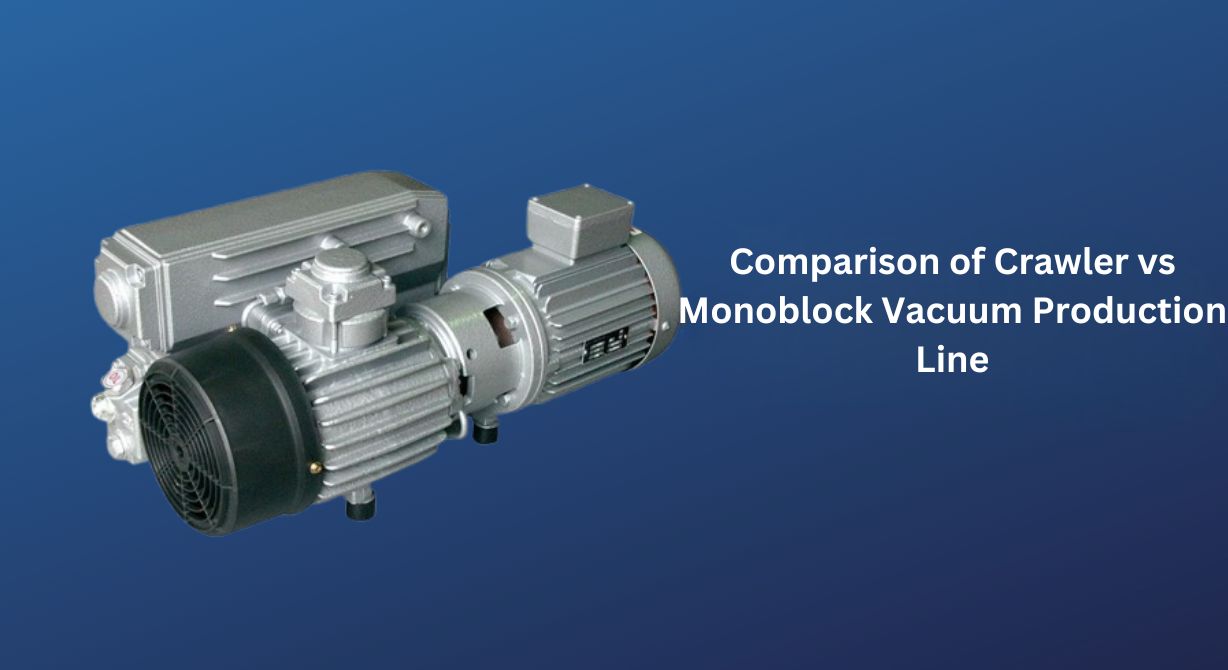
Although rotary vane vacuum pumps and monoblock vacuum pumps appear to perform similar tasks at first glance, significant differences emerge upon closer technical examination. The most fundamental distinction lies in body-motor integration and internal mechanical arrangement. The vane design typically features separate body and motor assemblies, offering greater configuration flexibility. The monoblock design combines motor and pump body in a single block, resulting in a more compact and rigid form.
Different curves are observed in pressure level and flow behavior. Vane pumps are strong in delivering stable flow across a wide pressure range. In the medium vacuum range where stable performance is required, vane models have proven themselves in many processes. Monoblock models exhibit more controlled behavior, especially in the low-pressure region. In terms of thermal management, monoblock design offers advantages with more balanced heat distribution; in vane designs, heat increase due to rotor-vane friction must be monitored more carefully.
Vibration control is another important comparison point. Thanks to the monoblock structure, vibration spreads over a wider surface and is felt at lower levels throughout the system. Vane designs can be more sensitive to mounting method, chassis quality, and alignment accuracy. Engineering teams should consider not only catalog values but also performance curves, thermal behavior graphs, noise levels, maintenance requirements, and integration ease when making a selection. Otherwise, a model that appears advantageous in theory may fail to deliver expected performance in the field.

How Is Performance and Durability Evaluated in Rotary Vane Pumps?
One of the strongest aspects of rotary vane vacuum pumps is their ability to deliver stable performance for years with proper operation and regular maintenance. This high-life design can continue its duty even under heavy-duty conditions. Evaluation includes performance curve analysis, flow output, stabilization at operating pressure levels, and response to load changes. Especially in lines with many shifts and continuous production mode, vane pumps are preferred because they can maintain flow and pressure balance for long periods.
On the durability side, the rotor-vane relationship plays a critical role. Vane material quality, lubrication conditions, internal surface roughness, and operating temperature are the main factors determining wear rate. When oil quality and change intervals are not properly managed, contamination increases, friction coefficient rises, and the motor consumes more power. This behavior both increases energy consumption and shortens the equipment’s mechanical life. With regular oil analysis, vibration monitoring systems, and temperature tracking methods, the health status of a vane pump can be interpreted at an early stage.
One of the field advantages of vane technology is the availability of spare parts and widespread service habits. Many maintenance teams have the experience to perform operations such as vane replacement, oil channel cleaning, and seal renewal in-house. This enables scheduled maintenance to be completed quickly and reduces downtime. Overall, the rotary vane vacuum pump is an extremely suitable solution for facilities requiring high flow, operating in the medium vacuum range, with established maintenance organization and seeking long-life performance.
Why Is Energy Efficiency Higher in Monoblock Vacuum Pumps?
Monoblock vacuum pumps inherently feature characteristics that provide advantages in energy efficiency. The motor and pump body being on the same block reduces mechanical losses. Using fewer couplings, additional connection apparatus, or alignment elements limits losses during power transmission. This structure makes it easier to keep motor efficiency closer to real operating conditions.
Internal friction behavior is generally more controlled in monoblock design. Because the compression zone, thermal balance, and lubrication channels are designed in a compact layout, temperature rise can be kept within certain limits. In a system where temperature is under control, oil viscosity remains in the ideal range, sealing surfaces are protected, and the friction coefficient is maintained at the target level. When all these factors combine, the amount of energy required to reach the same vacuum level decreases. In energy efficiency comparisons, monoblock designs are seen to operate with lower kWh consumption in many scenarios.
In facilities where energy costs are high, carbon footprint targets are tracked, and sustainable production policies are implemented, the monoblock vacuum pump provides a significant strategic advantage. Operating multiple monoblock pumps in series or cascade in central vacuum stations can significantly reduce both energy consumption and maintenance load. This creates a measurable savings effect not only at the single pump level but across the entire system.
How Do Maintenance Requirements Differ Between Rotary Vane and Monoblock Models?
Rotary vane and monoblock vacuum pumps have different dynamics in terms of maintenance requirements. In the vane design, internal mechanical components require more frequent inspection. Vane surfaces, rotor slots, oil channels, and sealing elements must be checked at certain intervals depending on production conditions. Oil change frequency is generally higher, and maintaining oil quality is critical for performance. If a regular maintenance program is not applied, vane wear accelerates, internal friction increases, and vacuum level becomes unstable.
In monoblock vacuum pumps, the more compact and closed body structure can extend maintenance intervals. Since internal components operate thermally more balanced, wear processes progress relatively more controlled. Oil change intervals can be less frequent, and lower vibration levels cause less mechanical fatigue. However, due to the compact design, some service operations may require special expertise; therefore, creating a maintenance plan in accordance with manufacturer recommendations is important.
When analyzing maintenance requirements, oil change costs, spare part prices, service accessibility, downtime, and labor required during maintenance should be considered. Although vane models require frequent maintenance, they can be easily serviced by in-house teams in many facilities. Monoblock designs require maintenance at longer intervals but may need authorized service support. The facility should decide which model is more manageable based on its own maintenance capability and shift schedule.
How Does the Performance Difference Appear on the Production Line?
The performance of a vacuum pump on production lines cannot be measured solely by the ultimate pressure value stated in the catalog. What really matters is how the system behaves under real process conditions. Factors such as how stably it maintains vacuum level under load, activation-deactivation frequency, heating behavior, noise level, and vibration profile directly affect production quality and cycle times.
The rotary vane vacuum pump provides tempo-compatible, stable suction in lines operating at high flow and medium vacuum range. It has a structure capable of keeping up with production speed, especially in food packaging, plastic vacuum forming, and high-cycle CNC applications. The monoblock vacuum pump stands out with lower noise, better vibration control, and optimized energy use. It offers remarkable advantages in precision processes, production areas where operator comfort is important, and projects where energy savings are a priority.
The performance difference can be measured by line downtime, changes in cycle times, product quality consistency, and operator feedback. Engineering teams can plan a certain monitoring period after commissioning and analyze field data for both technologies comparatively. This approach also creates a strong reference data set for future investments.
Which Model Is More Economical in Terms of Energy Efficiency?
When making an energy efficiency comparison, looking only at instantaneous power consumption does not provide a healthy evaluation. What matters is the total energy consumed while obtaining a specific production output. Monoblock vacuum pumps can operate at lower kWh values in many scenarios thanks to low friction losses, compact body, and high motor efficiency classes. When energy consumed per ton of production is examined, the monoblock design creates a serious advantage, especially in lines requiring long-term and constant vacuum.
The rotary vane vacuum pump can be the right choice in terms of energy-efficiency balance in lines with wide flow range and processes with sudden demand changes. A properly selected vane model, operated with appropriate capacity and set values, can keep energy consumption at reasonable levels while meeting high flow requirements. The most accurate model in terms of energy becomes clear with process requirement analysis.
When making factory-level comparisons, factors such as annual operating time, number of shifts, average load profile, ambient temperature, and maintenance quality must also be included in the equation. The same pump type can exhibit completely different energy performance under different operating habits. Therefore, making decisions based on real field energy reports offers a more accurate approach both technically and financially.
Total Cost of Ownership (TCO) is one of the most critical evaluation frameworks when selecting a vacuum pump. Purchase price is only the visible part of the cost items. Electricity consumption, scheduled maintenance expenses, spare part replacements, production losses due to possible failures, and equipment downtime throughout the operating period form the real cost picture.
The rotary vane vacuum pump can be long-lasting and reliable equipment when maintenance is properly managed. Nevertheless, more frequent oil changes, periodic vane inspections, and internal cleaning needs must be taken into account in the TCO calculation. For the monoblock vacuum pump, lower energy consumption and less frequent maintenance intervals work in its favor, while the need for service intervention in some cases adds a different parameter to the TCO equation.
Decisions made without jointly evaluating operating cost differences, energy efficiency comparison, maintenance requirement analyses, and service life durability can lead to unexpected cost increases in the coming years. Thanks to the TCO approach, management teams can clearly see which model will be more economical at the end of three, five, or ten years. TCO analyses supported by energy optimization projects ensure that vacuum investments are strongly defended financially as well.
Which Model Is More Suitable for Specific Production Lines?
Every production line has different vacuum needs, and the ideal model selection is shaped accordingly. When viewed from the perspective of food production vacuum solutions; low noise, compact structure, energy efficiency, and hygiene-oriented design come to the fore. The monoblock vacuum pump can be preferred in many food factories because it combines these features. Vacuum selection for packaging machines affects both cycle speed and package quality; the energy efficiency advantage makes the monoblock design an important option here as well.
In chemical plants, factors such as contact with aggressive gases, high temperature, long-term operation under load, and gas resistance become decisive in vacuum selection. Vane designs can adapt to these heavy conditions with the right material and oil selection. Vane pumps also stand out with their wide capacity range and durability in plastic production, CNC clamping systems, and processes requiring high flow. It is not possible to talk about the most accurate model without examining each line’s operating time, start-stop count, target vacuum range, environmental conditions, and automation level.
When making sector-specific selections, conducting a new engineering analysis for each facility instead of simply repeating the model used in the previous project yields healthier results. Architecture, piping, energy infrastructure, and maintenance habits have more influence on the selection than one might think.
From an Engineering Perspective: Which Model Is More Strategic?
From an engineering perspective, the choice between rotary vane vacuum pump and monoblock vacuum pump actually provides clues about the company’s production philosophy. The vane design is a very strong solution for facilities where continuity, high flow, and field teams’ maintenance experience are paramount. In plants where energy efficiency targets, compact installation, low noise, and digitalization projects come to the fore, the monoblock design becomes a strategic choice.
When creating process improvement strategies; technical parameters, energy consumption data, maintenance reports, and production tempo should be evaluated at the same table. Engineering teams should make decisions by combining performance curves, TCO calculations, real field experiences, and planned future capacity increases. Such an approach elevates vacuum selection from the level of “simple equipment purchase” to a fundamental investment decision that carries production efficiency.
For facilities aiming for sustainable production, vacuum technologies are of critical importance in terms of energy management and process stability. A correctly chosen rotary vane or monoblock vacuum pump not only meets today’s needs but also forms a solid foundation for future automation projects, capacity increases, and energy optimization efforts. Thus, the company gains a roadmap that strengthens its competitive advantage through technical infrastructure.