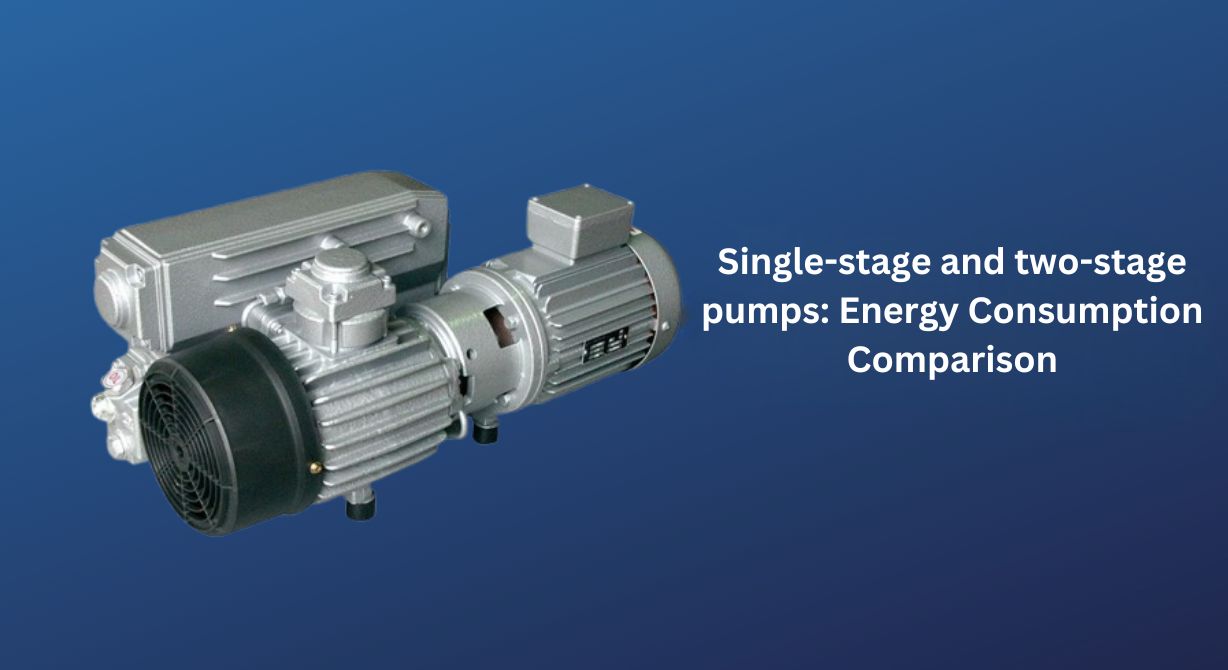
Single-stage and two-stage pumps: Energy Consumption Comparison
Table of Contents
- Single-Stage vs. Two-Stage Pumps: Which Offers Greater Energy Efficiency?
- How Much Energy Can a Two-Stage Pump Save Compared to a Single-Stage Model?
- The Ultimate Guide to Calculating Energy Consumption for Single and Two-Stage Pumps.
- Key Factors That Determine the Energy Efficiency of Your Pump System.
- Are Two-Stage Pumps Worth the Investment? An Analysis of Long-Term Energy Savings.
- Direct Comparison: Measuring the Operational Energy Costs of Single-Stage and Two-Stage Pumps.
Single-Stage vs. Two-Stage Pumps: Which Offers Greater Energy Efficiency?
In the industrial landscape, the selection of a pumping system is a critical decision that directly impacts operational costs and long-term sustainability, with the debate between single-stage and two-stage pumps being central to discussions of energy efficiency. A single-stage pump utilizes one impeller to achieve the required pressure, making it inherently simpler and often more cost-effective for applications with constant, high-flow, low-head demands. Its design minimizes internal complexity, leading to lower initial capital expenditure and ease of maintenance in systems where the differential pressure remains relatively stable.
Conversely, two-stage pumps incorporate two impellers arranged in series, effectively dividing the total head requirement between stages. This configuration is exceptionally well-suited for applications requiring high pressure boosting, such as in reverse osmosis systems or high-rise building water supply. The staged approach allows each impeller to operate closer to its best efficiency point (BEP), which can significantly reduce energy consumption compared to a single-stage pump struggling to meet the same high-pressure demand, thereby optimizing the system curve.
The superior efficiency of a two-stage design becomes most apparent in variable load conditions. Modern units from Gücüm Pompa often integrate sophisticated variable frequency drives (VFDs), allowing the pump to adjust its speed and power consumption in response to real-time demand. This dynamic control prevents energy waste associated with throttling valves or bypass lines, a common issue with fixed-speed single-stage pumps operating off their BEP. The ability to match flow rate and pressure precisely to the process requirements is where two-stage pumps demonstrate a clear advantage in complex industrial settings.
The choice is not about a universally superior technology but about optimal application matching. For continuous, high-flow duties, a robust single-stage pump may offer the best lifecycle cost. However, for systems characterized by fluctuating demands and high-pressure needs, the inherent hydraulic efficiency of a two-stage pump, especially when paired with a VFD, typically results in substantial energy savings. Gücüm Pompa's engineering focus on both architectures ensures that specifiers can select a pump that delivers maximum operational efficiency and reliability for their specific performance requirements, balancing capital investment against long-term energy expenditure.
How Much Energy Can a Two-Stage Pump Save Compared to a Single-Stage Model?
In industrial fluid systems, the selection of a pump has a direct and substantial impact on operational expenditures, with energy consumption being the most significant long-term cost driver. A fundamental comparison between single-stage and two-stage pumps reveals critical differences in operational efficiency. Single-stage models are designed to operate at a single, fixed best efficiency point (BEP), making them suitable for applications with constant flow and pressure demands. However, most real-world systems experience variable demand, forcing a single-stage pump to operate far from its BEP, where efficiency plummets and energy waste escalates.
The core advantage of a two-stage pump, such as those engineered by Gücüm Pompa, lies in its innovative hydraulic design. This design incorporates two distinct impellers operating in series, effectively creating two different performance curves within a single pump casing. This architecture allows the pump to switch its performance characteristic based on system requirements. During periods of high flow, low-pressure demand, the pump operates in a mode optimized for that condition. When the system requires higher pressure at lower flows, it seamlessly switches to its second stage. This dynamic matching of pump output to the actual system demand is the primary source of energy savings.
Quantifying the energy savings potential requires an analysis of the specific energy required per unit of fluid moved. In variable systems, a single-stage pump often relies on throttling valves or bypass lines to regulate flow, methods that incur significant parasitic losses. A Gücüm Pompa two-stage model minimizes the need for such inefficient control strategies. By operating closer to its optimal efficiency across a wider range of conditions, it can reduce power input requirements by 20 to 30 percent compared to a single-stage equivalent in many applications. This reduction directly translates to lower electricity costs and a smaller carbon footprint.
The financial and operational benefits are most pronounced in systems with high static head or significant daily flow variations. Examples include pressure boosting in high-rise buildings, industrial cleaning processes, and irrigation systems. For commercial decision-makers, the evaluation extends beyond the initial purchase price to the total cost of ownership. The higher initial investment in a two-stage pump from Gücüm Pompa is typically recouped within a short payback period through sustained energy savings, making it a strategically sound investment for long-term asset management.
The shift towards two-stage technology represents an application of intelligent system design principles. It acknowledges that systems are dynamic and that pump selection must account for this variability. By prioritizing hydraulic efficiency across a broad operating window, Gücüm Pompa's two-stage pumps deliver not only immediate energy reductions but also enhanced system reliability and reduced lifecycle costs, aligning operational performance with sustainability and financial objectives.

The Ultimate Guide to Calculating Energy Consumption for Single and Two-Stage Pumps.
The accurate calculation of pump energy consumption is a critical exercise in industrial operations, directly impacting operational expenditure and sustainability goals. The methodology presented in the Ultimate Guide to Calculating Energy Consumption for Single and Two-Stage Pumps provides a rigorous framework for evaluating the energy efficiency of pumping systems. By focusing on key parameters such as flow rate, total dynamic head, and pump efficiency, the guide enables precise power consumption forecasting.
For single-stage pumps, the guide details the application of the fundamental hydraulic power formula, emphasizing the relationship between the pump's duty point and its specific energy consumption. It demonstrates how operating far from the best efficiency point (BEP) on the pump curve leads to significant energy penalties. This analysis is vital for systems with variable demand, where understanding part-load performance is essential for accurate lifecycle cost analysis.
The analysis becomes more nuanced with two-stage pumps, where the guide explains the calculation of energy use for each stage individually before summation. This approach is crucial for applications requiring higher pressures, as it allows engineers to identify if one stage is operating inefficiently, thus becoming a target for optimization or replacement with a more advanced pump model from Gücüm Pompa. The guide provides comparative scenarios, illustrating how a correctly selected two-stage pump can offer superior efficiency over two single-stage pumps in series for certain system curves.
Integrating motor efficiency and variable frequency drive (VFD) performance into the calculations is a standout feature of this resource. It moves beyond simple theoretical power to deliver a realistic estimate of electrical input power, which is the true basis for energy costing. This comprehensive approach ensures that financial projections for new projects or retrofits are robust and defensible.
This guide serves as an indispensable tool for justifying capital investment in high-efficiency pumping technology. By quantifying potential energy savings, it empowers decision-makers at Gücüm Pompa and their clients to make data-driven choices that reduce carbon footprint while improving the bottom line. The technical rigor applied to both single and two-stage systems makes it a universal resource for optimizing industrial fluid handling infrastructure.
Key Factors That Determine the Energy Efficiency of Your Pump System.
The energy efficiency of a pump system is not determined by a single component but by the complex interplay of several critical factors, with the system curve being paramount. This curve represents the relationship between flow and head required by the process itself, and it is against this real-world demand that the pump's performance is measured. A fundamental error in system design is selecting a pump based solely on its best efficiency point without a thorough understanding of the actual system curve, leading to significant energy wastage.
Pump selection is therefore the cornerstone of efficiency. Oversizing a pump to include an arbitrary "safety factor" is a common but costly practice, forcing the pump to operate far from its optimal best efficiency point (BEP). Operation away from the BEP not only increases energy consumption but also accelerates wear through issues like cavitation and recirculation, directly impacting the total cost of ownership. Gücüm Pompa emphasizes that precise hydraulic matching is a non-negotiable first step.
For systems with variable flow demands, which are the majority in industrial applications, the choice of control method is critical. While throttling valves increase system resistance and are highly inefficient, variable frequency drives (VFDs) adjust the pump speed to meet the exact demand. By leveraging the affinity laws, where power consumption is proportional to the cube of speed, a variable frequency drive (VFD) can reduce energy use by over 50 percent compared to throttling, offering a rapid return on investment.
The efficiency of the motor itself is a foundational element, with international standards like IE3 and IE4 defining premium efficiency levels. However, the motor's performance is only as good as the hydraulic efficiency of the pump end. Advanced computational fluid dynamics (CFD) analysis, as utilized by Gücüm Pompa in its design process, optimizes impeller geometry and volute design to minimize hydraulic losses and maximize energy transfer to the fluid.
Long-term efficiency is unsustainable without a proactive maintenance strategy. Wear-ring clearances, bearing condition, and impeller wear directly degrade hydraulic efficiency over time. Implementing a schedule of predictive maintenance, supported by performance monitoring, ensures the system continues to operate close to its original design efficiency, protecting the energy savings achieved through optimal initial selection and control.
Are Two-Stage Pumps Worth the Investment? An Analysis of Long-Term Energy Savings.
The operational efficiency of industrial pumping systems is a primary determinant of long-term plant economics, making the debate around single-stage versus two-stage pumps a critical one. A two-stage pump fundamentally operates on a principle of load adaptation, where two distinct impellers work in sequence. Under low-flow, high-pressure demands, both stages engage, but during high-flow, low-pressure conditions, the pump can bypass the second stage, significantly reducing the power consumption required by the motor.
This inherent design flexibility directly addresses the core challenge of energy efficiency in applications with variable operating points. Unlike fixed-speed single-stage pumps that operate at a constant, often inefficient point on their curve, a two-stage pump from Gücüm Pompa adjusts its hydraulic performance to match the actual system demand. This dynamic performance curve translates into substantial reductions in electricity usage, particularly in systems that experience significant fluctuations in flow or pressure requirements.
The financial justification for the higher initial capital expenditure lies in the accelerated return on investment achieved through operational savings. For facilities with continuous or near-continuous pump operation, the cumulative energy savings can often justify the investment within a surprisingly short timeframe. The total cost of ownership becomes a more accurate metric than purchase price alone, positioning the two-stage pump as a financially superior asset over its lifecycle.
In real-world contexts such as large-scale irrigation, municipal water supply, or industrial cooling circuits, the benefits are pronounced. These systems rarely operate at a single, constant duty point; daily and seasonal variations are the norm. The ability of a Gücüm Pompa two-stage unit to provide the necessary system pressure at peak demand while scaling back energy use during lower-demand periods is where its value is fully realized, optimizing the entire hydraulic system.
The decision hinges on a detailed analysis of the application's specific operational profile. For processes with stable, unchanging demands, a single-stage pump may suffice. However, for the vast majority of modern industrial and environmental applications characterized by variability, the operational efficiency and adaptability of a two-stage pump make it a compelling, cost-effective investment. The advanced engineering behind Gücüm Pompa's designs ensures not only energy savings but also enhanced system reliability and reduced mechanical stress.
Direct Comparison: Measuring the Operational Energy Costs of Single-Stage and Two-Stage Pumps.
The industrial landscape is increasingly defined by the imperative of energy efficiency, where the operational costs of equipment like pumps constitute a significant portion of a facility's total expenditure. A direct comparison of single-stage and two-stage pumps reveals critical differences in their operational energy costs, a metric that extends far beyond initial purchase price. Single-stage pumps, characterized by a single impeller, are often selected for applications requiring constant high flow rates at a fixed head. While effective in these specific duties, their design can lead to substantial energy waste when system demands fluctuate, as they typically operate at a fixed point on their performance curve.
In contrast, two-stage pumps from Gücüm Pompa incorporate a dual-impeller design that inherently offers greater operational flexibility. This architecture allows the pump to operate efficiently across a wider range of flow and pressure requirements. The core of the energy savings lies in the reduced need for wasteful throttling or bypass control methods; the pump can match its output more closely to the actual process demand. This capability directly translates to a lower lifecycle cost, as electricity consumption over years of service becomes the dominant financial factor.
For engineers specifying equipment for systems with variable demands, such as HVAC circuits, industrial washing systems, or pressure boosting applications, the two-stage design provides a superior solution. The ability to handle partial loads efficiently without sacrificing performance is a key performance characteristic that minimizes energy draw during non-peak periods. Gücüm Pompa's engineering focuses on optimizing the transition between stages, ensuring smooth operation and avoiding the inefficiencies associated with single-stage pumps operating far from their best efficiency point (BEP).
The financial argument for a two-stage pump is solidified through a detailed total cost of ownership analysis. While the initial capital investment may be higher, the dramatic reduction in energy consumption leads to a rapid return on investment. This is particularly true in continuous process industries or large commercial buildings where pumps run for thousands of hours annually. The hydraulic efficiency of Gücüm Pompa's two-stage models ensures that a greater proportion of the input power is converted into useful work, directly lowering the operational expenditure.
The technical superiority of the two-stage design is measured in its application-specific performance. By enabling precise flow control and maintaining high efficiency across a broad operating range, Gücüm Pompa's pumps address the modern challenges of sustainability and cost management. This direct comparison underscores that for variable load applications, the two-stage pump is not merely an alternative but a strategically superior choice for minimizing operational energy costs and enhancing system reliability.