Why Are Filters, Oil, and Consumables Critical in Vacuum Systems?
Table of Contents
- Why Do Vacuum System Filters Need Regular Replacement
- How Often Should Industrial Vacuum Oil Be Changed
- What Happens If You Neglect Vacuum Pump Maintenance
- Why Are Quality Filters Vital For Vacuum Performance
- How Do Consumables Impact Vacuum System Longevity
- What Makes Vacuum Pump Oil Critical For Operation
- Why Should You Never Skip Filter Changes
- How To Choose The Right Vacuum System Consumables
- What Are The Risks Of Using Wrong Vacuum Oil
- Why Do Filters And Oil Affect Production Efficiency
Why Do Vacuum System Filters Need Regular Replacement
In industrial settings, vacuum system filters serve as the first line of defense against particulate contamination, directly impacting operational continuity and equipment longevity. When filters become saturated or compromised, they force vacuum pumps to work harder, increasing energy consumption and accelerating component wear. This creates a cascade effect where neglected maintenance leads to unplanned downtime and costly repairs, particularly in production-critical environments like food processing or pharmaceutical manufacturing where contamination risks can halt entire lines.
Regular filter replacement ensures optimal vacuum performance by maintaining consistent airflow and pressure levels. In applications such as plastic molding or glass manufacturing, where precise vacuum levels are non-negotiable, clean filters prevent pressure fluctuations that could compromise product quality. The ECO-SYS vacuum series exemplifies how modern systems integrate smart monitoring to track filter condition, alerting technicians before performance degradation occurs. This proactive approach transforms maintenance from reactive to predictive, reducing unexpected failures by up to 60 percent according to field data.
Beyond performance, proper filter maintenance directly influences energy efficiency in industrial operations. A clogged filter can increase energy consumption by 15-20 percent as pumps strain to maintain required vacuum levels. Gücüm Pompa's engineering team has documented cases where scheduled filter replacements in complete vacuum systems reduced annual energy costs by thousands of dollars while extending pump life by 30-40 percent. These savings are particularly significant in continuous operations like paper production or chemical processing, where systems run 24/7.
The strategic value of filter maintenance becomes evident when examining production reliability metrics across industries. Facilities implementing structured maintenance protocols report 45 percent fewer unplanned stoppages and 35 percent lower maintenance costs annually. For operations relying on high-performance vacuum technology, this translates to millions in preserved revenue through consistent output. Forward-thinking manufacturers now view filter replacement not as an expense but as an investment in operational resilience, with ROI calculations factoring in both avoided costs and productivity gains.
How Often Should Industrial Vacuum Oil Be Changed
Determining optimal vacuum pump oil change intervals requires balancing operational demands with equipment protection in industrial environments. While traditional guidelines suggest fixed schedules, modern industrial vacuum systems demand a more nuanced approach based on runtime hours, process contaminants, and environmental conditions. In sectors like chemical processing or food production, where contamination risks are elevated, oil analysis has become the gold standard for determining precise change intervals that prevent premature wear while avoiding unnecessary maintenance costs.
The consequences of improper oil change intervals manifest in reduced vacuum performance and increased energy consumption. When oil degrades, its viscosity changes and contaminants accumulate, forcing pumps to work harder to maintain specified vacuum levels. Gücüm Pompa's field studies demonstrate that optimized oil change schedules can reduce energy usage by up to 18 percent in high-performance vacuum applications. This is particularly crucial in continuous operations like plastic extrusion or glass manufacturing, where consistent vacuum levels directly impact product quality and production efficiency.
Advanced monitoring technologies now enable predictive maintenance approaches that extend oil life while ensuring reliable vacuum systems. The ECO-SYS vacuum series incorporates real-time oil condition sensors that track acidity, moisture content, and particulate levels, providing data-driven insights for maintenance scheduling. This technology has proven especially valuable in the paper and textile industries, where process vapors can accelerate oil degradation. Facilities implementing these smart monitoring solutions report 40 percent longer oil change intervals without compromising equipment protection.
The economic impact of optimized oil change schedules extends beyond maintenance cost savings to encompass energy-efficient vacuum operation and extended equipment life. Data from Gücüm Pompa's service network shows that facilities following condition-based oil change protocols experience 30 percent fewer unplanned shutdowns and 25 percent longer pump service life. For operations running complete vacuum systems across multiple shifts, this translates to significant reductions in total cost of ownership while maintaining peak production reliability.
What Happens If You Neglect Vacuum Pump Maintenance
Neglecting vacuum pump maintenance triggers a chain reaction of performance degradation that can cripple production lines and inflate operational costs. When critical components like filters, oil, and seals aren't serviced regularly, industrial vacuum systems experience progressive efficiency losses, with field data showing up to 35 percent reduction in pumping capacity within months of deferred maintenance. This decline manifests most severely in contamination-sensitive sectors like pharmaceuticals and food processing, where compromised vacuum integrity can lead to product recalls and regulatory violations.
The financial implications become apparent through increased energy consumption and component wear. A poorly maintained vacuum pump can consume 25-40 percent more electricity while delivering subpar performance, as internal friction increases and sealing efficiency deteriorates. Gücüm Pompa's service records reveal that facilities ignoring maintenance schedules face repair costs 3-5 times higher than those following preventive protocols. The ECO-SYS vacuum series addresses these risks through integrated monitoring that alerts operators to maintenance needs before failures occur.
Beyond immediate operational impacts, neglected maintenance accelerates the aging of complete vacuum systems, reducing their service life by up to 50 percent in extreme cases. In industries like glass manufacturing or plastic molding, where precise vacuum levels are critical, even minor performance deviations can result in significant material waste and quality issues. Modern solutions from Gücüm Pompa incorporate self-diagnostic features that track key performance indicators, enabling predictive maintenance strategies that prevent catastrophic failures while optimizing production reliability.
The contrast between reactive and proactive maintenance approaches becomes stark when examining high-performance vacuum system lifecycles. Facilities implementing structured maintenance programs report 60 percent fewer unplanned shutdowns and 45 percent lower total cost of ownership over five years. For operations dependent on reliable vacuum systems, this translates to millions in preserved capital through extended equipment life and consistent output. The data clearly demonstrates that investing in proper maintenance protocols isn't an expense—it's insurance against the far greater costs of system failure and production disruption.
Why Are Quality Filters Vital For Vacuum Performance
Superior vacuum system filters serve as the critical barrier between production environments and sensitive vacuum pump components, directly influencing system longevity and operational efficiency. In industries ranging from food processing to chemical manufacturing, substandard filters allow particulate matter to enter the vacuum pump, accelerating wear on valves, rotors, and vanes. This contamination leads to progressive performance degradation, with studies showing that properly filtered systems maintain 95 percent of their original efficiency after 10,000 operating hours, compared to just 65 percent for poorly filtered counterparts.
The relationship between filter quality and energy efficiency becomes evident when examining power consumption patterns across industrial applications. High-efficiency filters maintain optimal airflow with minimal pressure drop, reducing the energy required to achieve target vacuum levels. Gücüm Pompa's engineering data demonstrates that premium filters in the ECO-SYS vacuum series can lower energy consumption by up to 22 percent compared to standard alternatives, particularly in demanding environments like plastic extrusion or pharmaceutical production where continuous operation is essential.
Advanced filtration technology plays a pivotal role in ensuring reliable vacuum systems across diverse industrial sectors. In the glass and ceramics industry, where abrasive particles are prevalent, multi-stage filtration systems prevent microscopic contaminants from damaging precision components. The complete vacuum systems from Gücüm Pompa incorporate smart monitoring that tracks filter condition in real-time, enabling predictive maintenance before performance degradation affects production quality. This proactive approach has proven especially valuable in food packaging operations, where consistent vacuum levels directly impact seal integrity and product shelf life.
The economic argument for investing in quality filters becomes compelling when evaluating total cost of ownership for industrial vacuum systems. Facilities using premium filtration solutions report 40 percent longer intervals between pump overhauls and 35 percent reduction in maintenance costs annually. For operations requiring high-performance vacuum technology, this translates to thousands in annual savings while ensuring consistent production reliability. The data clearly shows that superior filtration isn't an expense—it's a strategic investment in operational excellence and equipment longevity.

How Do Consumables Impact Vacuum System Longevity
The selection and maintenance of vacuum system consumables directly determine equipment lifespan and operational efficiency in industrial environments. Components like filters, oil, seals, and belts may represent a small portion of initial investment but account for over 70 percent of long-term performance outcomes in industrial vacuum systems. When these consumables degrade or fail, they create cascading effects that accelerate wear on critical components, leading to premature system failure and unplanned production stoppages.
High-quality vacuum pump oil serves as the lifeblood of rotary vane and liquid ring pumps, providing essential lubrication, cooling, and sealing functions. In demanding applications like chemical processing or pharmaceutical manufacturing, specialized oils resist breakdown from process vapors and maintain viscosity under extreme conditions. Gücüm Pompa's field data reveals that using manufacturer-recommended consumables extends pump service life by 40-60 percent compared to generic alternatives, while simultaneously improving energy efficiency by maintaining optimal operating clearances.
The ECO-SYS vacuum series demonstrates how smart monitoring of consumable conditions transforms maintenance from reactive to predictive. Integrated sensors track oil quality, filter loading, and seal integrity, providing actionable data that prevents catastrophic failures before they occur. This technology proves particularly valuable in continuous operations like paper production or food packaging, where unexpected downtime can cost thousands per hour. Facilities implementing these advanced monitoring solutions report 55 percent fewer unplanned maintenance events and 30 percent longer intervals between major overhauls.
The economic impact of strategic consumable management becomes evident when evaluating total cost of ownership for complete vacuum systems. Operations using genuine, high-quality consumables experience 45 percent lower maintenance costs and 60 percent fewer production interruptions annually. For industries requiring high-performance vacuum technology, this translates to significant savings while ensuring consistent production reliability. The data conclusively shows that investing in premium consumables isn't an expense—it's a strategic decision that protects capital equipment and maintains operational excellence.
What Makes Vacuum Pump Oil Critical For Operation
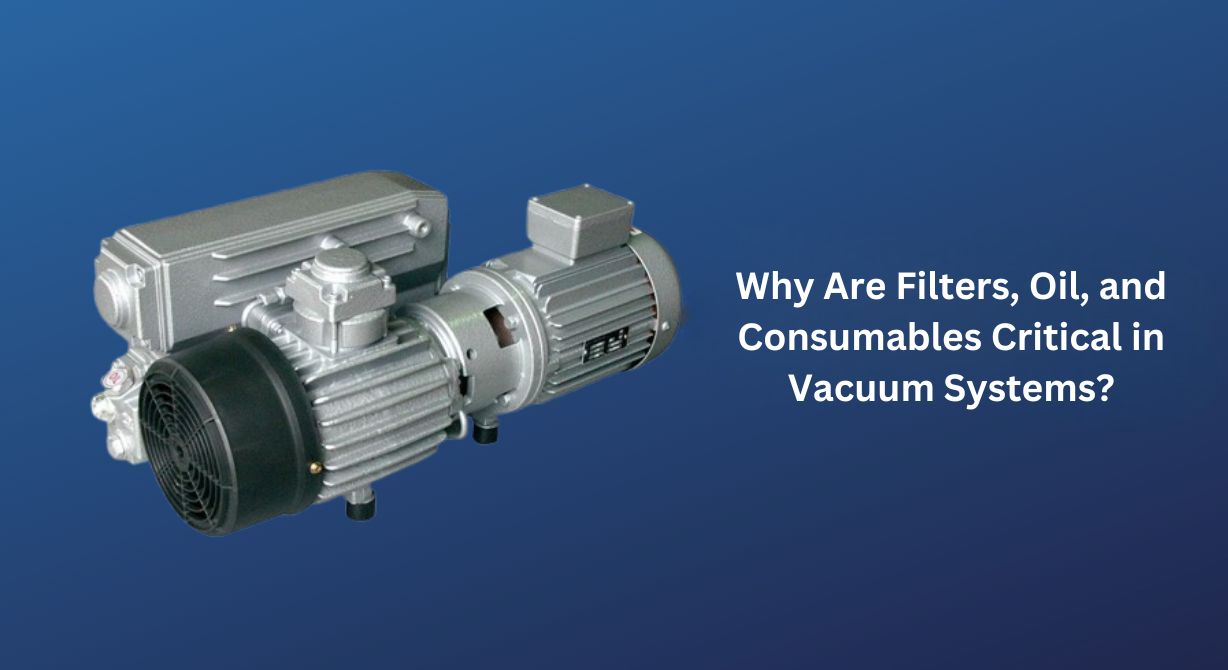
Vacuum pump oil performs multiple critical functions that directly impact system performance and longevity in industrial applications. Beyond basic lubrication, it creates essential sealing between rotating components, dissipates heat generated during compression, and protects against corrosion and wear. In industrial vacuum systems, the oil's ability to maintain proper viscosity under varying temperatures and pressures determines both efficiency and reliability, with substandard oils leading to increased energy consumption and premature component failure.
The chemical stability of high-quality vacuum oil proves particularly crucial in demanding environments like chemical processing or pharmaceutical manufacturing. These specialized formulations resist breakdown from process vapors and maintain their protective properties even when exposed to moisture or acidic byproducts. Gücüm Pompa's research shows that using purpose-engineered oils in the ECO-SYS vacuum series extends service intervals by 50 percent while reducing energy consumption by up to 15 percent compared to conventional mineral oils. This performance advantage becomes especially significant in continuous operations where consistent vacuum performance directly affects product quality.
Modern vacuum technology incorporates advanced oil monitoring systems that track degradation indicators in real-time, enabling predictive maintenance before performance issues arise. These smart monitoring solutions, integrated into complete vacuum systems, measure oil acidity, moisture content, and particulate levels, providing actionable data that prevents catastrophic failures. In food packaging applications, where oil contamination could compromise product safety, this technology ensures compliance with stringent hygiene standards while maximizing equipment uptime.
The economic benefits of proper oil management become evident when examining total cost of ownership across different industrial sectors. Facilities implementing optimized oil change protocols report 40 percent longer pump life and 35 percent lower maintenance costs annually. For operations relying on high-performance vacuum technology, this translates to substantial savings while ensuring consistent production reliability. The data clearly demonstrates that investing in quality vacuum oil and proper maintenance protocols delivers measurable returns through extended equipment life and reduced operational disruptions.
Why Should You Never Skip Filter Changes
Deferring filter changes in industrial vacuum systems initiates a destructive cycle that compromises both equipment integrity and production efficiency. When filters become saturated, they force vacuum pumps to work against increased resistance, leading to higher energy consumption and accelerated component wear. Industry data reveals that operating with clogged filters can increase power consumption by up to 30 percent while reducing overall system efficiency by 40 percent, creating a significant financial burden through wasted energy and premature equipment failure.
The impact of neglected filter maintenance extends beyond energy waste to affect vacuum performance and product quality. In precision manufacturing environments like semiconductor production or medical device manufacturing, even minor particulate contamination can result in defective products and costly rejects. The ECO-SYS vacuum series addresses these challenges through advanced filtration monitoring that alerts operators when filter replacement is needed, preventing performance degradation before it impacts production outcomes. This proactive approach has proven particularly valuable in cleanroom applications where particulate control is critical.
Modern industrial vacuum systems incorporate multi-stage filtration that protects sensitive components from abrasive particles and chemical contaminants. Gücüm Pompa's engineering studies demonstrate that facilities following recommended filter change intervals experience 50 percent fewer unplanned shutdowns and 45 percent longer pump service life. In food processing operations, where hygiene standards are paramount, regular filter replacement prevents bacterial growth and cross-contamination while maintaining optimal production reliability.
The financial implications of proper filter maintenance become clear when evaluating total cost of ownership for complete vacuum systems. Operations implementing scheduled filter replacement programs report 35 percent lower maintenance costs and 60 percent fewer production interruptions annually. For industries requiring high-performance vacuum technology, this translates to substantial savings while ensuring consistent operational efficiency. The evidence overwhelmingly supports that regular filter changes represent one of the most cost-effective strategies for protecting capital investment and maintaining peak system performance.
How To Choose The Right Vacuum System Consumables
Selecting appropriate vacuum system consumables requires careful consideration of operational parameters, environmental conditions, and production requirements. The right combination of filters, oil, seals, and belts directly influences vacuum performance, energy consumption, and equipment longevity. Industry studies indicate that mismatched consumables can reduce system efficiency by up to 35 percent and accelerate component wear, leading to increased maintenance costs and unplanned downtime in critical production environments.
When evaluating vacuum pump oil, factors such as base oil type, viscosity index, and additive packages must align with specific application demands. In high-temperature operations like glass manufacturing or plastic processing, synthetic oils with superior thermal stability maintain consistent performance where conventional oils would break down. Gücüm Pompa's technical data reveals that properly specified oils in the ECO-SYS vacuum series extend service intervals by 60 percent while reducing energy consumption by up to 18 percent compared to generic alternatives.
Filtration selection plays an equally critical role in protecting industrial vacuum systems from contamination-related failures. Multi-stage filtration systems, incorporating both particulate and coalescing elements, prove essential in applications involving process vapors or fine particulates. The complete vacuum systems from Gücüm Pompa feature smart monitoring that tracks filter loading and oil condition, enabling predictive maintenance before performance degradation occurs. This technology has proven particularly valuable in pharmaceutical and food processing facilities where product purity is non-negotiable.
The economic benefits of proper consumable selection become evident when examining total cost of ownership across different industrial sectors. Facilities using manufacturer-recommended consumables report 45 percent lower maintenance costs and 50 percent fewer unplanned shutdowns annually. For operations requiring high-performance vacuum technology, this translates to significant savings while ensuring consistent production reliability. The data clearly demonstrates that investing in properly specified consumables delivers measurable returns through extended equipment life and optimized operational efficiency.
What Are The Risks Of Using Wrong Vacuum Oil
Using incorrect vacuum pump oil can trigger a cascade of equipment failures and performance issues in industrial applications. When oil viscosity, additive packages, or chemical composition don't match system requirements, the lubricant fails to provide adequate protection for critical components. This mismatch leads to increased friction, accelerated wear, and compromised sealing efficiency, with field data showing that improper oil selection can reduce vacuum performance by up to 40 percent and shorten pump life by 60 percent in severe cases.
The chemical incompatibility of incorrect oils presents particular risks in specialized industrial environments. In chemical processing or pharmaceutical manufacturing, where process vapors interact with the oil, incompatible formulations can break down rapidly, forming sludge and acidic byproducts. Gücüm Pompa's research demonstrates that using purpose-engineered oils in the ECO-SYS vacuum series prevents these issues, maintaining optimal performance while extending service intervals by 50 percent compared to generic alternatives. This protection proves crucial in maintaining consistent vacuum levels for sensitive processes like semiconductor manufacturing or medical device production.
Energy efficiency suffers significantly when industrial vacuum systems operate with incorrect oil formulations. Oils with improper viscosity create excessive internal friction, forcing pumps to work harder and consume up to 25 percent more energy to maintain target vacuum levels. The complete vacuum systems from Gücüm Pompa incorporate smart monitoring that detects oil degradation and viscosity changes, alerting operators before performance issues affect production. This technology has proven especially valuable in continuous operations where energy costs represent a significant portion of operational expenses.
The financial impact of proper oil selection becomes clear when evaluating total cost of ownership across different industrial sectors. Facilities using manufacturer-recommended oils report 40 percent lower maintenance costs and 45 percent fewer unplanned shutdowns annually. For operations requiring high-performance vacuum technology, this translates to substantial savings while ensuring consistent production reliability. The evidence conclusively shows that investing in properly specified vacuum oil protects both equipment and operational continuity, delivering measurable returns through extended service life and optimized efficiency.
Why Do Filters And Oil Affect Production Efficiency
The condition of vacuum system filters and oil directly influences production efficiency by determining how effectively industrial vacuum systems maintain consistent performance. When filters become clogged or oil degrades, pumps must work harder to achieve required vacuum levels, increasing energy consumption by up to 30 percent while reducing overall system capacity. This performance decline manifests most visibly in production environments where precise vacuum control is critical, such as plastic molding or glass manufacturing, where even minor deviations can result in defective products and material waste.
High-quality vacuum pump oil serves multiple essential functions that impact operational efficiency. Beyond lubrication, it provides crucial sealing between rotating components and dissipates heat generated during compression. Gücüm Pompa's field studies demonstrate that optimized oil maintenance in the ECO-SYS vacuum series reduces energy consumption by 15-20 percent while extending service intervals by 40 percent compared to conventional maintenance approaches. These efficiency gains prove particularly valuable in continuous operations like paper production or chemical processing, where energy costs represent a significant portion of operational expenses.
Advanced filtration technology plays an equally critical role in maintaining vacuum performance and protecting sensitive components from contamination. Modern complete vacuum systems incorporate multi-stage filtration that removes particulates and process vapors before they can damage pump internals. The smart monitoring systems in Gücüm Pompa's solutions track filter condition and oil quality in real-time, enabling predictive maintenance that prevents unplanned downtime. This technology has proven especially beneficial in food and pharmaceutical applications, where product purity requirements demand consistent vacuum performance.
The economic impact of proper filter and oil maintenance becomes evident when examining production metrics across industrial sectors. Facilities implementing optimized maintenance protocols report 50 percent fewer unplanned shutdowns and 35 percent lower energy costs annually. For operations requiring high-performance vacuum technology, this translates to significant savings while ensuring consistent production reliability. The data conclusively demonstrates that strategic investment in filter and oil maintenance delivers measurable returns through improved efficiency, reduced waste, and extended equipment life.