


In paper and packaging production, vacuum is an integral part of many processes such as dewatering, drying, material holding, and forming. This article covers, in general terms, the role of vacuum in the paper machine, applications in packaging production, system design, energy efficiency, and pump selection criteria. For the right vacuum solution for your application, you can consult the Gücüm Pompa technical team.
Table of Contents
- Why Is the Vacuum System Considered a Basic Infrastructure Element in Paper and Packaging Production?
- How Does Vacuum Work in the Dewatering Process in Paper Machines?
- What Is the Role of Vacuum in the Drying Section?
- What Functions Do Vacuum Suction Boxes and Suction Rolls Perform?
- What Is the Effect of Vacuum Level on Paper Quality in Paper Production?
- In Which Processes Are Vacuum Systems Used in Packaging Production?
- How Is Vacuum System Design Done in Paper Machines?
- How Are Paper Vacuum Systems Optimized in Terms of Energy Consumption?
- What Criteria Are Decisive in Vacuum Pump Selection in the Paper and Packaging Sector?
- Frequently Asked Questions
Why Is the Vacuum System Considered a Basic Infrastructure Element in Paper and Packaging Production?
The vacuum system in paper production holds a central position in the operation of the paper machine; in paper factories, vacuum is an integral part of production. Ninety-nine percent of the fibrous suspension arriving at the machine head as raw material consists of water; the moisture content of the final product, paper, should be between five and eight percent. A significant part of this large-scale water removal process is carried out with mechanical forces, while vacuum is the key supporting element that increases the effectiveness of this mechanical process.
Packaging vacuum systems undertake critical functions both in the production of packaging material and in the packaging of the final product. In the production of cardboard, corrugated cardboard, and flexible packaging films, vacuum plays a decisive role in material holding and surface quality in forming, lamination, and printing processes. The high-speed and continuity-requiring production structure of the paper and packaging sector makes the reliability of the vacuum infrastructure a basic condition for operational sustainability.
How Does Vacuum Work in the Dewatering Process in Paper Machines?
In the wire section of the paper machine, the fibrous suspension is spread onto a moving wire and most of the water is removed by gravity. However, gravity force alone is not sufficient; vacuum suction boxes and suction rolls placed under the wire enable water to be removed from the paper fibers much faster and more effectively thanks to the negative pressure created on the opposite side. The vacuum level applied in the wire section usually ranges between 10 and 60 kPa, and as the machine speed increases, the required vacuum capacity also increases proportionally.
In the press section following the wire section, the paper is passed through high-pressure cylinder pairs together with wet felts. Vacuum also plays a critical role in removing water from the felt in the press section. Suction press rolls draw the water separated from the paper fibers inside by applying vacuum from inside, immediately after the nip. Every additional amount of moisture removed in the press section also reduces the steam requirement in the drying section; therefore, vacuum efficiency at this stage significantly affects the energy balance of the factory.
What Is the Role of Vacuum in the Drying Section?
In traditional cylinder drying groups, the paper loses moisture by contacting steam-heated cylinder surfaces; vacuum contributes indirectly rather than directly at this stage. In Yankee cylinder and air drying applications, vacuum takes a more active role. Especially in advanced drying technologies used in soft paper and tissue production, the paper is both dried and its surface structure is formed by being drawn from a moisture-resistant support structure with vacuum-supported air flow.
High-flow vacuum applied in advanced drying technologies significantly increases drying speed by actively removing moisture-carrying air from the paper surface. From an energy perspective, it is known that mechanical water removal requires much lower energy compared to steam drying; therefore, increasing press section performance with vacuum support can provide energy savings, generally at a lower cost than investing in the drying section.
What Functions Do Vacuum Suction Boxes and Suction Rolls Perform?
Vacuum suction boxes are elements placed in a fixed position under the wire of the paper machine and draw water from the wire surface through channels where vacuum is applied from inside. The vacuum level and position of each suction box affect fiber distribution and water removal efficiency; therefore, the suction box configuration should be optimized according to the machine operating speed and paper grammage. In high-speed machines, suction boxes operate with multi-zone design; each zone operates at different vacuum levels and supports the homogeneity of the paper profile.
Suction rolls are cylindrical elements that rotate with the paper or felt in the wire and press sections and have vacuum applied to their inner surface. When the perforated roll surface contacts the paper or felt during rotation, vacuum immediately draws the water inside. The effect of suction press rolls on paper moisture content is critical; maintaining the same dryness level while increasing production speed largely depends on the performance of these elements.
What Is the Effect of Vacuum Level on Paper Quality in Paper Production?
The vacuum level affects paper quality through multiple parameters. Vacuum applied in the wire section affects fiber orientation and fiber distribution homogeneity; an unbalanced vacuum profile causes grammage differences across the paper width and mechanical property inconsistencies. Especially in high-quality standard products such as offset printing papers and graphic papers, the vacuum profile must be kept stable across the full width of the machine.
Excessive vacuum in the press section can cause fiber separation and surface peeling in delicate paper structures, while insufficient vacuum leads to wet breaks and machine stops. The optimum vacuum level is determined experimentally according to paper type, fiber composition, machine speed, and felt properties, and fine tuning is an ongoing operational discipline. A stable vacuum profile contributes to quality consistency at different machine speeds and paper types; the suitability of Gücüm Pompa's liquid ring vacuum pumps for the flow and vacuum needs of your application can be evaluated together with the technical team.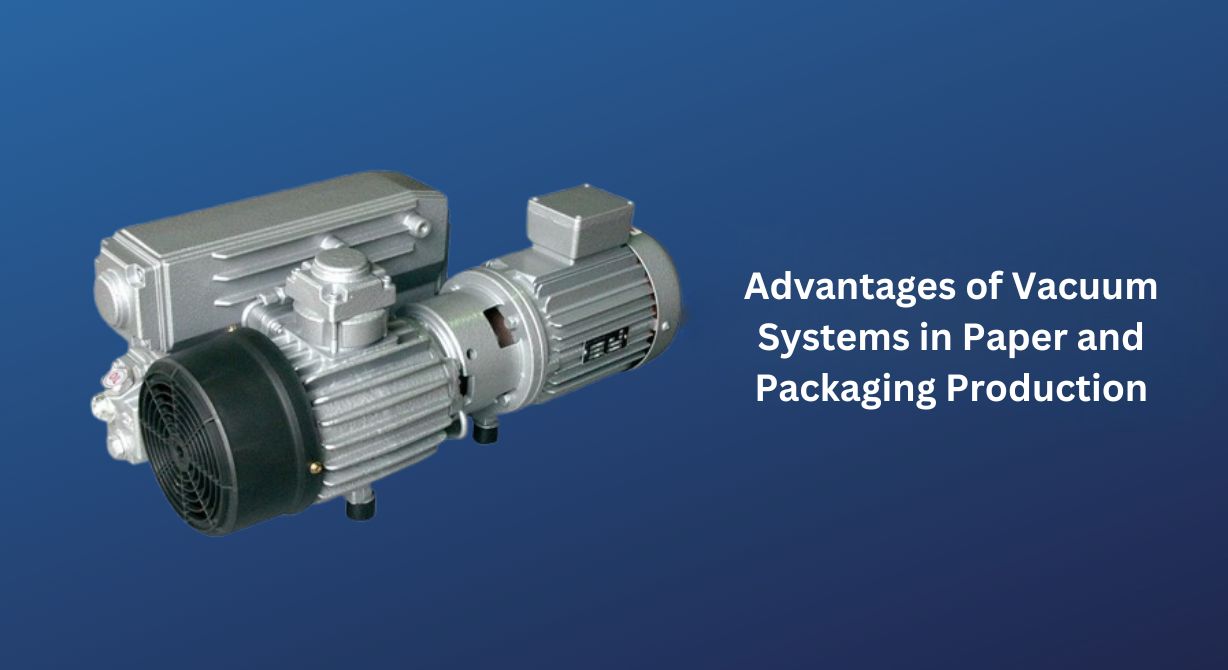
In Which Processes Are Vacuum Systems Used in Packaging Production?
In the production of flexible packaging films, vacuum undertakes the film holding function in the printing machine; suction plates that ensure full and smooth contact of the film surface with the printing cylinder make it difficult to achieve consistent printing quality without vacuum. In lamination processes, vacuum removes air bubbles from the surface when combining two or more packaging layers, helping to achieve good adhesion; laminated material with air bubbles creates unacceptable quality problems in terms of both appearance and barrier properties.
In thermoform packaging production, plastic film or sheet is drawn onto the mold surface with the help of vacuum after being heated and the product shape is formed. The vacuum level and application time used are critical parameters that determine the thickness homogeneity of the packaging and corner filling quality. Vacuum systems also undertake indispensable functions in corrugated cardboard and cardboard production, in suction cylinders in drying groups, and in the production of paper-film composite packaging materials.

How Is Vacuum System Design Done in Paper Machines?
Vacuum system design for paper machines begins with mapping all vacuum consumption points of the machine. The vacuum level and flow values required by each of the wire suction boxes, suction rolls, press suction rolls, and felt conditioning elements are determined separately; consumption points at different levels are grouped and zone-based vacuum distribution is designed.
The vacuum system in paper machines usually consists of central pump groups; high-flow low-vacuum zones and low-flow but deeper vacuum zones are fed by separate pump groups. As machine width increases and speed rises, total vacuum flow increases significantly; in large paper machines, vacuum system installations with tens of thousands of cubic meters of air capacity per hour may be required. In systems at this scale, load balancing between pumps, frequency controlled drive integration, and automatic control systems are critically important for energy efficiency.
How Are Paper Vacuum Systems Optimized in Terms of Energy Consumption?
In paper factories, the vacuum system can account for a significant share of total factory energy consumption. Frequency controlled drives are one of the important energy saving tools, dynamically adjusting pump speed according to machine speed and production conditions. Compared to fixed-speed pumps, inverter-driven systems can provide meaningful energy savings under variable load conditions.
Leak management is also an overlooked dimension of energy optimization in paper vacuum systems. Leaks in the vacuum line cause the pump to produce extra flow unnecessarily and therefore consume excess energy. Periodic leak testing and detection can provide significant energy gains, especially for factories that have been operating for a long time. The Gücüm Pompa technical team can support factories in achieving their efficiency targets by providing technical consultancy on vacuum system optimization.
What Criteria Are Decisive in Vacuum Pump Selection in the Paper and Packaging Sector?
High flow capacity is the first priority criterion in paper machine vacuum pump selection. The high air flow rate required in the wire and press sections makes it mandatory for the pump's nominal flow to be fully compatible with the machine capacity. Insufficient flow directly limits production speed; this situation creates an unacceptable constraint in terms of competitiveness.
The capacity to safely handle moist gas flow that may contain paper fibers is at the top of technical selection criteria for liquid ring or specially designed pumps. Due to the continuous production structure, near-continuous operation throughout the year is the norm in paper machines; in a system operating at this scale, ease of maintenance, spare parts supply speed, energy efficiency, and long service intervals of the pump are among the decisive criteria in the selection process. Integration capability with automation and control systems has become an additional selection parameter for Industry 4.0 compatible operations in modern paper factories.
Frequently Asked Questions
Are Different Pumps Used for the Wire and Press Sections in Paper Machines?
Yes, since the vacuum requirements of the wire and press sections are usually different, zone-based separate pump groups are applied. The wire section requires high flow and low-medium vacuum, while press suction rolls may need a higher vacuum level. Zone-based design both increases energy efficiency and allows each zone to be optimized independently.
Why Are Liquid Ring Vacuum Pumps Widely Preferred in Paper Production?
Liquid ring vacuum pumps are widely preferred in the industry for their natural tolerance to carried-over moisture and fiber particles, simple and robust mechanical structure, and long service intervals. Mechanical failure risk is low in moist gas flow; this feature offers reliability advantage that overlaps with continuous production structure.
What Vacuum Level Is Required in Packaging Thermoform Machines?
The vacuum level required in thermoform packaging production varies in the range of 10 to 100 mbar absolute pressure depending on film type, mold geometry, and product depth. Higher vacuum requirement may be in question in deep draw applications; the optimum value is determined by mold trials.
How Does the Vacuum System Affect Paper Break Frequency?
Unstable or insufficient vacuum profile causes moisture distribution differences on the paper surface and increases break risk in press and drying sections. Especially during machine transitions and speed changes, maintaining vacuum stability is a critical operational parameter that determines break frequency and related production losses.
How Should the Vacuum System Maintenance Plan Be Created in a Paper Factory?
The maintenance plan should be structured around intervals set according to manufacturer recommendations and operating conditions for water quality and lime buildup control, mechanical and sealing inspection, and comprehensive pump revision. Compliance with planned maintenance windows during which production stops are scheduled is an effective way to reduce unexpected stops.
