


Versatile Uses of Industrial Vacuum Pumps in the Marine and Shipbuilding Industries
Table Of Contents
- What are the Most Effective Uses of Industrial Vacuum Pumps in the Maritime and Shipbuilding Industries?
- What is the role of industrial vacuum pumps in marine vehicle maintenance?
- Which Type of Vacuum Pump Is Used in Marine Applications?
- What are the Reliable Industrial Vacuum Pumps Used in Ship Maintenance?
- Which Vacuum Pumps Are Suitable for Tank, Bilge and Oil Systems on Marine Vehicles?
- Which Criteria Should You Consider When Selecting a Vacuum Pump for Marine Applications?
- Which Vacuum Pumps Provide High Efficiency and Low Energy Consumption in Shipbuilding?
- What are the contributions of industrial vacuum pumps in ship safety and emission control?
What are the Most Effective Uses of Industrial Vacuum Pumps in the Maritime and Shipbuilding Industries?
In the maritime and shipbuilding sectors, vacuum pumps are used in many places, from composite boat manufacturing to liquid and gas lines on board. Choosing the right pump type and capacity directly affects process quality, operating safety and energy consumption. The main applications are:
- Vacuum infusion and vacuum bagging: removing the air inside the mould and drawing resin into the fibre layers when producing glass-fibre or carbon composite hulls and parts.
- Priming of pump suction lines: removing air from the suction line of centrifugal pumps such as ballast, fire and bilge pumps so that it fills with liquid; liquid ring vacuum pumps are often chosen for this job.
- Tank and bilge emptying: drawing off liquid left at tank bottoms and in lines with the help of vacuum.
- Moisture and gas removal in oil and fuel treatment units: separation processes that operate under vacuum.
- Vacuum systems: generating vacuum in vacuum sanitation systems and in vacuum holding/lifting applications.
To determine the right vacuum pump for your application, you can contact the Gücüm Pompa technical team.
What is the role of industrial vacuum pumps in marine vehicle maintenance?
On ships and boats, maintenance matters for reliable system operation, fewer unplanned stoppages and limited environmental risk. In maintenance, vacuum pumps are used not for surface cleaning but for commissioning systems and handling liquids and gases. Typical examples:
- Removing air from the suction line of centrifugal pumps at start-up.
- Drawing liquid from tank, bilge and sludge lines.
- Removing moisture and dissolved gas in oil treatment units.
- Checking the tightness of pipelines and vessels under vacuum.
The vacuum pump itself also needs regular maintenance: oil level and oil quality on oil-lubricated types, the condition of the operating liquid on liquid ring pumps, and seal and rotor checks on all types. Gücüm Pompa supports you in this process with spare parts and service.
Which Type of Vacuum Pump Is Used in Marine Applications?
The suitable pump type depends on the fluid being handled and the vacuum level required:
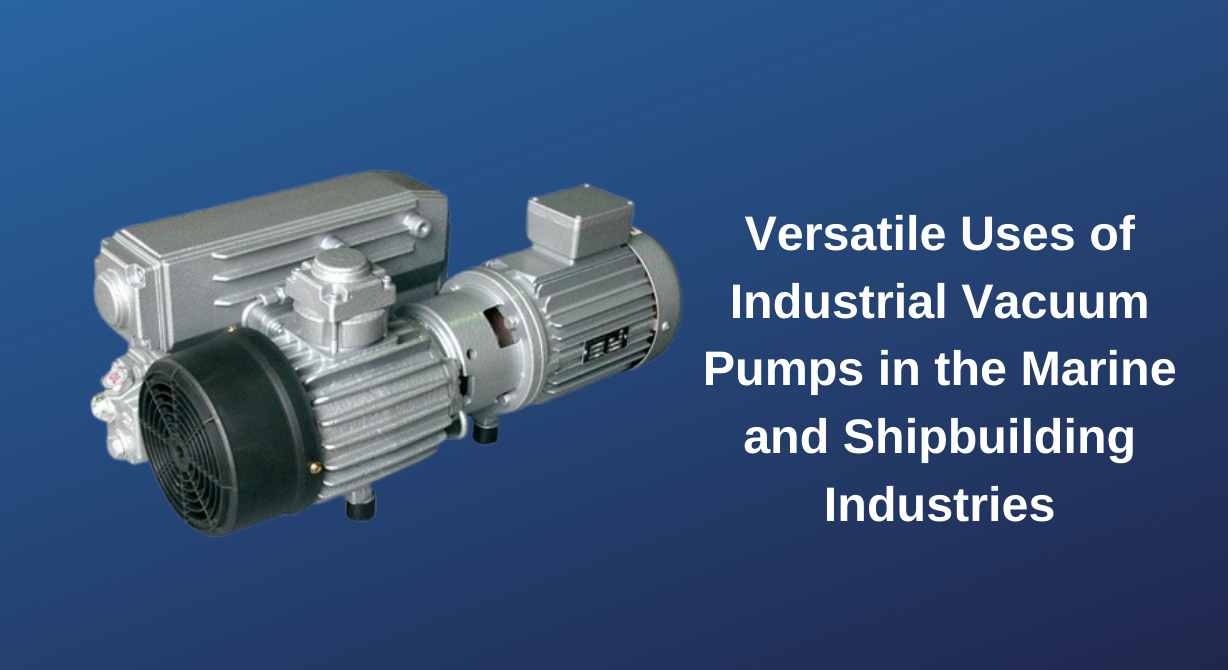
- Liquid ring vacuum pump: used on humid or vapour-laden gas lines where liquid carry-over is possible, and in pump priming applications; it requires an operating liquid.
- Oil-lubricated rotary vane vacuum pump: preferred for applications that need high vacuum on dry air lines (e.g. composite infusion); a separator (resin trap) at the pump inlet is recommended to prevent resin vapour and liquid from reaching the pump.
- Dry (oil-free) vacuum pump: suitable for processes where oil contamination is not acceptable.
Whether a model suits your needs is determined by pumping speed (m³/h), ultimate pressure (mbar) and operating conditions. The Gücüm Pompa technical team can support you in this evaluation.

What are the Reliable Industrial Vacuum Pumps Used in Ship Maintenance?
It would not be right to call a single model the "most reliable" for every application; reliability depends on choosing a pump suited to its operating conditions and maintaining it regularly. In the marine environment the following points are especially important:
- Corrosion resistance of housing and connection materials against salty, humid air.
- The condition of sealing elements (gaskets) and how easily they can be replaced.
- Choosing a pump rated for continuous or frequent-duty operation.
- Access to spare parts and service support.
You can contact the Gücüm Pompa technical team when selecting a pump against these criteria.
Which Vacuum Pumps Are Suitable for Tank, Bilge and Oil Systems on Marine Vehicles?
When choosing a vacuum pump for tank, bilge and oil systems, the following questions need answers:
- Is the fluid drawn only air, or does it also contain moisture, vapour or liquid droplets?
- If there is a risk of liquid carry-over, can a separator be fitted at the inlet, or is a liquid ring type more suitable?
- What vacuum level (mbar) and pumping speed (m³/h) are required?
- Are there flammable or hazardous vapours in the environment, and if so, is the equipment suitable for these conditions?
Note: Cleaning the interior and exterior surfaces of a ship from dust, rust and salt deposits, and HEPA-filtered air cleaning, belong to industrial vacuum cleaners. A vacuum pump, on the other hand, generates vacuum within a system or process. This article deals with vacuum pumps.
Which Criteria Should You Consider When Selecting a Vacuum Pump for Marine Applications?
The following criteria should be evaluated together when making a selection:
- Required pumping speed (m³/h) and ultimate pressure (mbar).
- The type of fluid to be handled: dry air, humid gas, vapour or resin vapour.
- Duty pattern: continuous or intermittent operation.
- Installation space, vibration and salty, humid ambient conditions.
- Ease of maintenance and access to spare parts.
If you share your application conditions, the Gücüm Pompa technical team can help you evaluate the suitable pump type and capacity.
Which Vacuum Pumps Provide High Efficiency and Low Energy Consumption in Shipbuilding?
Energy consumption depends not only on the pump type but also on correct sizing and how the pump is used. The main approaches that improve efficiency in shipbuilding and boat manufacturing are:
- Avoid selecting a pump larger than needed; excess capacity consumes energy unnecessarily.
- Where suitable, adjust capacity to the process demand (e.g. speed control).
- On liquid ring pumps, control the circulation and temperature of the operating liquid.
- Eliminate leaks in lines and connections.
For an energy-efficient selection, you can share your operating conditions with the Gücüm Pompa technical team.
What are the contributions of industrial vacuum pumps in ship safety and emission control?
Because vacuum pumps can draw liquids and gases within closed lines, they can help reduce the risk of spills and leaks compared with open discharge. Controlled collection of residues during tank and line emptying also helps limit environmental impact.
In applications involving hazardous or flammable vapours, suitable materials, a separator/filter and equipment appropriate to the ambient conditions must be selected. Compliance with emission and safety regulations is assessed separately, according to the regulations and classification society requirements that apply to the system as a whole; a vacuum pump alone does not ensure compliance.
To select a vacuum pump suited to your application, you can contact the Gücüm Pompa technical team.
