


Industrial Vacuum Pump Solutions for Emerging Industrial and Environmental Needs
Table Of Contents
- What are Industrial Vacuum Pumps?
- How Do Industrial Vacuum Pumps Function and In Which Areas Are They Used?
- How Do Industrial Vacuum Pumps Provide Efficiency?
- How to Increase Work Efficiency with Industrial Vacuum Pumps?
- What are the Usage Areas of Industrial Vacuum Pumps in Maritime and Ship Industries?
- Which Industrial Vacuum Pump Options Are Compatible with Emerging Environmental Standards?
What are Industrial Vacuum Pumps?
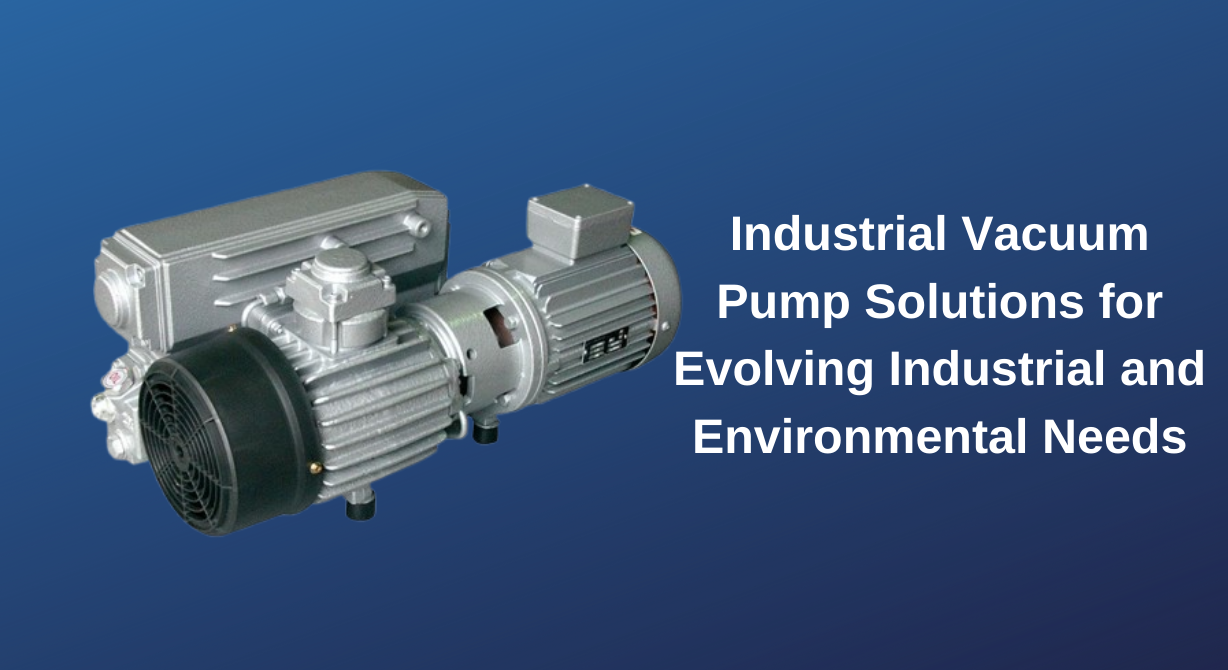
Industrial vacuum pumps are machines that remove gas or vapour from a sealed volume to create a pressure below atmospheric pressure (vacuum) inside it. They underpin many industrial processes such as vacuum packaging, drying, distillation, filtration, moulding, gas and vapour evacuation, and vacuum holding and lifting.
A vacuum pump and an industrial vacuum cleaner are different pieces of equipment: a vacuum pump lowers the pressure for a process or system, while a vacuum cleaner collects dust and debris. This article covers vacuum pumps. Gücüm Pompa manufactures liquid ring, oil-lubricated rotary vane and dry (oil-free) vacuum pumps.
How Do Industrial Vacuum Pumps Function and In Which Areas Are They Used?
Depending on its operating principle (rotor and vanes, a liquid ring or dry mechanisms), a vacuum pump traps the gas in the volume, compresses it and discharges it to atmosphere. This creates a pressure difference between the volume and the surroundings. The performance of a pump is defined mainly by its pumping speed (m³/h) and the ultimate pressure (mbar) it can reach.
Vacuum pumps are used in many sectors. Main examples:
- Food and packaging: vacuum packaging and gas exchange.
- Chemical and process industry: distillation, drying, filtration and gas-vapour evacuation.
- Plastics, composites and moulding: removing air from the mould, vacuum infusion.
- Manufacturing and automotive: vacuum holding and part handling.
- Power plants and shipbuilding: system and line vacuum, pump priming.
The right pump is determined by the humidity and vapour content of the gas being handled, the vacuum level required and the running time. The Gücüm Pompa technical team can support you in this selection.

How Do Industrial Vacuum Pumps Provide Efficiency?
Vacuum pumps support production efficiency by reaching the vacuum level required by the process quickly and steadily. Efficiency is closely linked to choosing the right pump type and the right size:
- Capacity (m³/h) should match the process demand; an oversized pump wastes energy, while an undersized one prolongs process time.
- Leaks in lines and connections make the pump run longer than necessary; eliminating them reduces energy consumption.
- A liquid ring type may suit humid or vapour-laden processes, an oil-lubricated rotary vane type may suit processes needing high vacuum on dry air lines, and a dry (oil-free) pump may suit processes where oil contamination is undesirable.
- Planned maintenance (checking seals, oil or operating liquid) helps preserve performance.
To make the most suitable selection in terms of energy consumption, you can share your operating conditions with the Gücüm Pompa technical team.
How to Increase Work Efficiency with Industrial Vacuum Pumps?
To increase work efficiency with a vacuum pump, the pump must be suited to the process and maintained regularly:
- Continuity: A correctly selected and maintained pump helps reduce unplanned stoppages so that the workflow continues without interruption.
- Repeatability: A stable vacuum level supports consistent product quality in processes such as packaging, moulding and drying.
- Safety: Drawing liquids and gases within closed lines can help reduce the risk of contact and leaks compared with handling them in the open.
- Maintenance planning: Access to spare parts and service support shortens downtime.
You can contact the Gücüm Pompa technical team to determine the right vacuum pump solution for your operation.
What are the Usage Areas of Industrial Vacuum Pumps in Maritime and Ship Industries?
In the maritime and shipbuilding sector, vacuum pumps are used in the vacuum infusion of glass-fibre and carbon composite hulls, in removing air from the suction lines of pumps such as ballast, fire and bilge pumps (priming), in emptying tanks and lines, and in removing moisture and gas in oil treatment units.
Cleaning ship surfaces, removing rust and salt deposits, and preparing surfaces before painting are not vacuum pump tasks; they belong to the relevant surface cleaning and industrial vacuum cleaning equipment.
When selecting a vacuum pump, pumping speed (m³/h), ultimate pressure (mbar), the type of fluid handled and salty, humid ambient conditions should be evaluated together.
Which Industrial Vacuum Pump Options Are Compatible with Emerging Environmental Standards?
When selecting a vacuum pump with environmental goals in mind, the following points stand out:
- Energy consumption: correct sizing and elimination of leaks.
- Oil-free operation: dry (oil-free) vacuum pumps are preferred in applications where oil contamination of the process is undesirable.
- Oil vapour control: on oil-lubricated pumps, a suitable oil mist separator/filter can be fitted at the outlet.
- Water use: on liquid ring pumps, recirculating the operating water can help reduce water consumption.
Compliance with a specific standard or regulation is assessed separately according to the product, the application and the installation conditions; this article makes no commitment regarding any certificate. To identify suitable options, you can contact the Gücüm Pompa technical team.
