


In many processes across chemical, food, and paper industries, the gas stream entering the vacuum system carries a significant amount of water vapor or other volatile vapors. This makes vacuum pump selection more complex than a standard dry-gas application, because a poorly matched pump may fail to deliver expected performance under vapor load, or suffer damage over time. This article covers what to look for when selecting a vacuum pump for vapor-heavy processes, and which pump technologies are better suited to these conditions.
Table Of Contents
- Why Does a Vapor-Heavy Process Complicate Vacuum Pump Selection?
- Why Do Liquid Ring Vacuum Pumps Stand Out in Vapor-Heavy Processes?
- How Does Gas Ballast Adapt a Rotary Vane Pump to a Vapor-Heavy Process?
- How Does a Water-Circulated Vacuum Unit Help in High-Vapor Processes?
- Why Does Service Liquid Temperature Become More Critical in High-Vapor Processes?
- Do You Need a Booster When Vapor Load Is Very High?
- What Data Should You Share When Selecting a Pump for a Vapor-Heavy Process?
- Frequently Asked Questions
Why Does a Vapor-Heavy Process Complicate Vacuum Pump Selection?
When a gas stream contains vapor, its partial pressure rises during compression and can reach the saturation point, causing it to condense. Depending on the pump type, this condensation leads to different outcomes: dry-type or oil-sealed pumps face a risk of internal condensation, corrosion, or oil contamination, while liquid ring pumps greatly reduce this risk because they already carry a continuously circulating liquid.
For that reason, choosing the right pump for a vapor-heavy process shouldn't stop at required capacity (m³/h) and target vacuum level (mbar) alone — how the process's vapor load will interact with the pump technology also needs evaluation.
Why Do Liquid Ring Vacuum Pumps Stand Out in Vapor-Heavy Processes?
Liquid ring vacuum pumps naturally tolerate vapor in the incoming gas stream by design. Because the gas stays in constant contact with the service liquid throughout compression, entrained vapor mixes into the service liquid and is discharged from the system in liquid phase — a mechanism we covered in more detail in our article "How Does a Liquid Ring Vacuum Pump Work?"
This makes liquid ring pumps the default choice for processes where vapor load is unavoidable — distillation, evaporation, drying, and vacuum filtration among them. But this tolerance has its own limit: service liquid temperature directly affects how much vapor load can be handled safely, a relationship we look at more closely below.
How Does Gas Ballast Adapt a Rotary Vane Pump to a Vapor-Heavy Process?
In some processes, rotary vane (oil-sealed) pumps may be preferred for their deeper vacuum capability. In that case, the gas ballast feature steps in to prevent the process's vapor load from damaging the pump oil. Gas ballast admits a controlled amount of dry air into the compression chamber, allowing vapor to discharge without condensing — a mechanism we explained in detail in our article "What Is Gas Ballast?"
If a rotary vane pump is being considered, the "maximum water vapor capacity (kg/h)" figure given in the catalog should be compared against the process's actual vapor load. If that load exceeds the pump's rated capacity, condensation risk may persist even with gas ballast open — in which case a higher-capacity model or a different technology should be considered.
How Does a Water-Circulated Vacuum Unit Help in High-Vapor Processes?
When a process's vapor load is particularly high, water-circulated vacuum units offer a suitable solution for such processes. In this unit, the heavy vapor entering the pump condenses within the system and is discharged as water, and that water does not damage the pump.
The unit's vacuum tank also prevents foreign objects and liquids coming from the suction line from reaching the pump directly, protecting the pump while giving the system a vacuum reserve that reduces fluctuations in vacuum pressure. Thanks to the separator tank and heat exchanger, water consumption also drops significantly compared to an open-loop system. Gücüm Pompa's water-circulated unit can provide absolute vacuum pressure down to 33 mbar with a service water temperature of 15°C.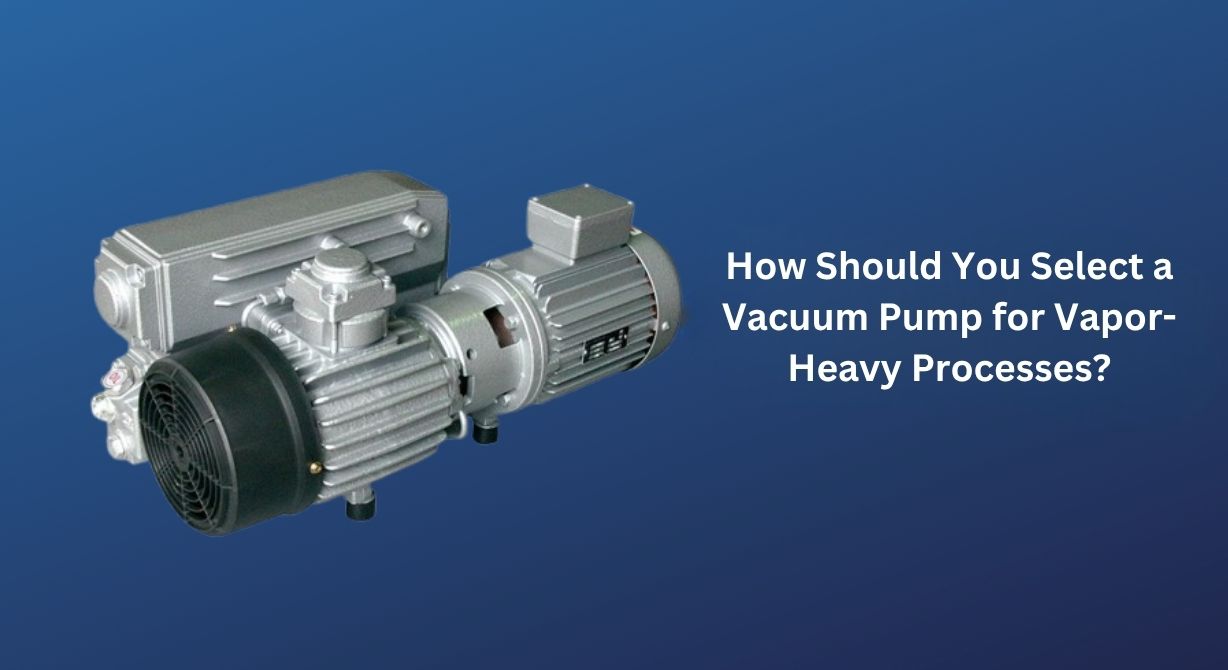
Why Does Service Liquid Temperature Become More Critical in High-Vapor Processes?
Service liquid temperature matters in every liquid ring pump application, but this importance grows further in vapor-heavy processes. As we covered in our article "How Do You Read mbar, mmHg and Absolute Pressure on a Vacuum Pump Datasheet?", the service liquid's own vapor pressure limits the vacuum level the pump can reach. Since additional vapor load from the process contributes to this same limit, running with a warmer service liquid can both reduce the achievable vacuum level and increase the risk of uncondensed vapor accumulating in the system.
For this reason, cooling the service liquid — for example, through a closed-loop heat exchanger — typically becomes a critical design element in vapor-heavy processes. This also explains why water-circulated vacuum units are chosen not just for water savings, but for maintaining a stable service liquid temperature.

Do You Need a Booster When Vapor Load Is Very High?
Since vapor load tends to shrink the vacuum level a liquid ring pump or water-circulated unit can achieve, processes that target very deep vacuum while also carrying a high vapor load may bring booster systems into consideration — covered in our article "What Is a Vacuum Booster?" That said, the booster itself provides no special vapor tolerance; the liquid ring pump or vacuum unit ahead of it must be correctly selected to handle the process's vapor load.
In these combined systems (a vapor-tolerant main pump plus a booster), evaluating process data as a whole is important, so each component performs its role under the right conditions.
What Data Should You Share When Selecting a Pump for a Vapor-Heavy Process?
To select the right pump or unit for a vapor-heavy process, sharing the following with the pump manufacturer is recommended:
- Total gas volume in the process (m³/h) and the vapor fraction within it.
- The type of vapor (water vapor or another volatile substance).
- Target vacuum level (mbar).
- Available service water temperature and cooling options.
- Whether the process flow is continuous or batch, and whether vapor load stays constant throughout the process.
As this data becomes clear, it's easier to determine which solution — a liquid ring pump, a gas-ballasted rotary vane pump, a water-circulated unit, or a booster-supported system — best fits the process.
Frequently Asked Questions
Can a Dry-Type Vacuum Pump Be Used in a Vapor-Heavy Process?
Dry-type pumps face a higher risk of vapor condensing on internal surfaces, which is why liquid ring pumps or gas-ballasted rotary vane pumps are generally preferred for vapor-heavy processes. Exact suitability depends on the process's vapor fraction and the pump's technical specifications.
What's the Difference Between a Water-Circulated Unit and a Standard Liquid Ring Pump?
A water-circulated unit cools and reuses service water in a closed loop, and its separator tank keeps foreign matter and liquids from reaching the pump. This gives more stable operation, particularly in vapor-heavy and fluctuating processes; a standard open-loop liquid ring pump is a simpler installation but requires a continuous supply of fresh water.
What Should You Do If Vapor Load Changes Over Time in a Process?
When vapor load varies throughout a process, sizing the pump or unit around the highest point of that variation (the peak load) helps the system operate safely under varying conditions. Sharing this information with the pump manufacturer is important.
Which Pump Is Definitively Best for Vapor-Heavy Processes?
There's no single "best" pump — the right choice depends on factors like vapor fraction, target vacuum level, available water resources, and process continuity. Once process data is clear, it's best to compare a liquid ring pump, a gas-ballasted rotary vane pump, a water-circulated unit, and a booster-supported system on a project-specific basis.
