


A non-self-priming centrifugal water pump needs its casing and suction line primed and vented before it can pump water when they are full of air. In a vacuum-assisted system, a vacuum pump can remove that air. In groundwater applications, the vacuum pump handles air removal while a separate water pump transfers the water. Self-priming pumps and submersible installations have different operating arrangements.
Table Of Contents
- Why Do Non-Self-Priming Centrifugal Pumps Need Priming?
- What Role Does a Vacuum Pump Play in Priming?
- Lowering the Water Table on a Construction Site: Wellpoint Systems
- Why Does Vacuum Give an Extra Advantage in Fine-Grained Soil?
- What Matters on a Continuously Running Construction Site System?
- How Do Sand and Silt Drawn Up With the Water Affect the Pump?
- Frequently Asked Questions
Why Do Non-Self-Priming Centrifugal Pumps Need Priming?
A centrifugal pump's impeller throws liquid outward through centrifugal force as it spins, and that motion is what draws new liquid in on the suction side. But if there's air around the impeller instead of liquid, air's much lower density means that same spinning motion can't generate enough pressure difference, and the pump can't pull water upward. This shows up especially in installations where the water source sits below the pump itself, rather than the pump being submerged.
What Role Does a Vacuum Pump Play in Priming?
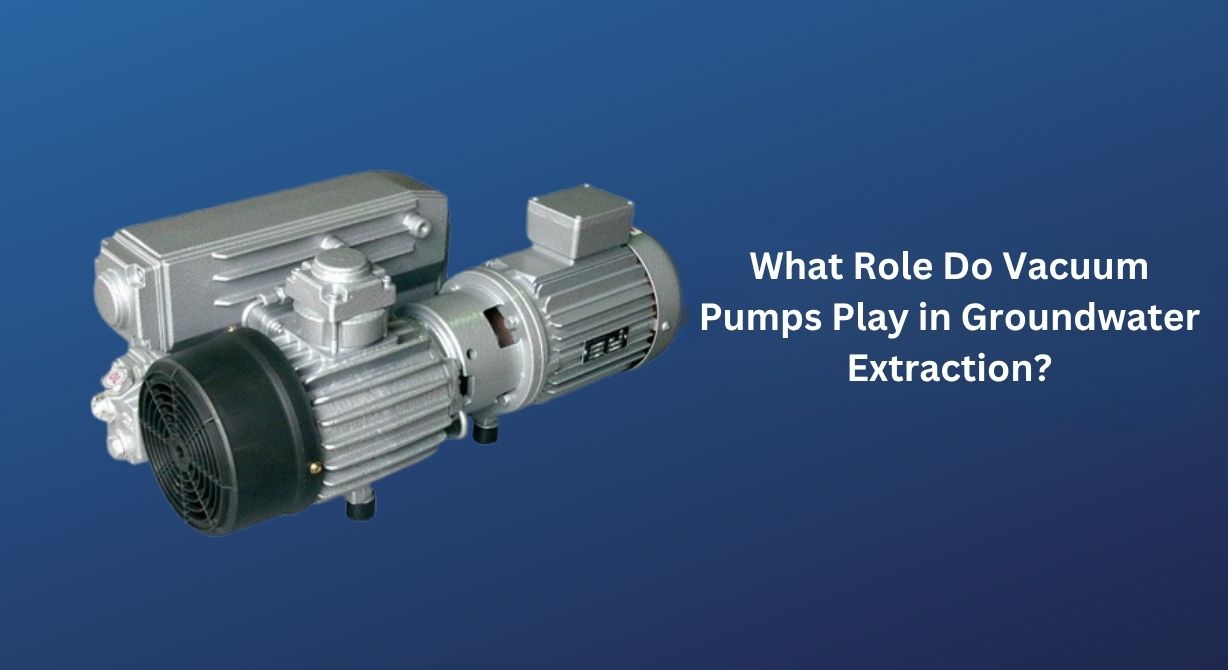
In a vacuum-assisted priming system, air is removed from the suction line and pump casing before the main pump starts. As pressure in the line falls, atmospheric pressure acting on the water surface causes water to rise into the suction line. Once the casing is filled, the centrifugal pump can be put into operation. This is called priming. Vacuum does not provide unlimited suction lift: the practical limit depends on atmospheric pressure, water temperature, pipe losses and the pump’s cavitation requirements. A suitable submersible or deep-well pump arrangement should be assessed separately for deep wells.
Lowering the Water Table on a Construction Site: Wellpoint Systems
When foundation excavation or tunnel work extends below the groundwater level, the excavation must be kept dry. Wellpoint systems connect small-diameter suction points around the excavation to a shared header pipe. In a vacuum-assisted arrangement, the vacuum pump removes air to help establish and maintain suction, while the system’s water pump discharges the collected water. Separating air and water limits unwanted liquid and solids entering the vacuum pump.
Because this method lowers the water table over a much larger area, and more predictably, than a single well could, it's the preferred approach for foundation work in regions with a high water table specifically.
Why Does Vacuum Give an Extra Advantage in Fine-Grained Soil?
Water may drain more readily under gravity in coarse sand or gravel. In fine sand and silty soils, low permeability and capillary effects can slow drainage. Under suitable conditions, a vacuum-assisted wellpoint system can increase the pressure difference that supports water movement towards the suction points. Results depend on soil permeability, layering and system tightness; the same performance should not be assumed in every fine-grained soil. Select the method through a geotechnical assessment.

What Matters on a Continuously Running Construction Site System?
Keeping an excavation dry usually requires uninterrupted operation for weeks, sometimes months; a pump stopping during that time can mean the excavation floods again. For this reason, low maintenance needs and stable operation take priority over short-term peak performance in construction-site applications. Keeping a backup pump on hand should be treated as a standard precaution on this kind of project.
How Do Sand and Silt Drawn Up With the Water Affect the Pump?
Groundwater may carry sand and silt depending on the soil. Select wellpoint screens and the system’s separation arrangement to limit solids reaching the pumps. A suitable air-water separator or receiver tank in the vacuum line helps prevent water and solids entering the vacuum pump. The water discharge pump must also suit the expected solids load, and filters and separators should be inspected regularly.
Frequently Asked Questions
Can a Vacuum Pump Lift the Water Directly?
In the vacuum-assisted systems discussed here, the vacuum pump is not the main water discharge pump. It removes air, helping water rise in the suction line and allowing priming. The system’s water pump transfers large volumes of water. A suitable separator should prevent unwanted water entering the vacuum pump.
Does Priming Need to Be Repeated at Every Start?
If the suction line is airtight and a suitable foot valve or check valve retains water in it, priming may not need to be repeated after a short stop. Repeat priming if the line drains, air leaks in or the system is opened for maintenance. Follow the pump and system operating instructions when putting the equipment into service.
How Many Wellpoints Are Needed?
The number of wells depends on the excavation's size, soil permeability, and the target drop in water level; this calculation is generally done project-by-project by a geotechnical engineer.
Which Gücüm Pompa Series Is Suitable for These Applications?
Select the appropriate series together with the Gücüm Pompa technical team, considering the target suction lift, water pump flow rate, suction-line volume, expected air leakage, duty time and separator arrangement.
