


In textile and leather manufacturing, removing excess moisture from material after wet processing steps is a critical stage for both product quality and energy cost. Vacuum technology can carry out this water removal at far lower energy cost than thermal drying, which is why it's widely used in both industries. This article covers exactly where and how vacuum pumps are used across textile finishing lines and leather processing facilities.
Table Of Contents
- How Does Vacuum Water Extraction Work on Textile Finishing Lines?
- Why Does Removing Water by Vacuum Before Drying Save Energy?
- Why Is Vacuum Used to Remove Air From Yarn Packages in Package Dyeing?
- How Do Vacuum Drying Machines Work in the Leather Industry?
- What Advantages Does Vacuum Leather Drying Offer Over Traditional Drying?
- Which Vacuum Pump Technology Is Preferred in Textile and Leather?
- Frequently Asked Questions
How Does Vacuum Water Extraction Work on Textile Finishing Lines?
On continuous textile finishing lines, fabric that has gone through wet processes such as washing or dyeing is typically passed through a vacuum extraction unit before entering the drying oven. A vacuum slot positioned beneath or above the fabric draws away excess water on its surface.
This step significantly lowers the fabric's moisture content before it enters thermal drying, so the drying oven needs to evaporate far less water. Vacuum slots are generally designed to match the line's running speed and require continuous, uninterrupted vacuum as the fabric moves through.
Why Does Removing Water by Vacuum Before Drying Save Energy?
Turning water from liquid to vapor requires far more energy than removing it mechanically. That's why removing a portion of the water in fabric through vacuum before it enters the drying oven meaningfully reduces total energy consumption — a principle identical to the paper machine example covered in our article "Where Are Liquid Ring Vacuum Pumps Used on a Paper Machine?"
On wide finishing lines running at high speed, the amount of water removed through vacuum extraction can translate into significant energy savings — which is why the vacuum system's capacity and stability matter for the line's overall energy efficiency.
Why Is Vacuum Used to Remove Air From Yarn Packages in Package Dyeing?
In package dyeing, yarn is wound onto a perforated cone or tube and loaded into a dyeing machine. Before dyeing begins, removing trapped air bubbles from within the yarn package — a step called de-aeration — matters, because pockets of trapped air can prevent dye liquor from penetrating the yarn evenly, leading to patchy or uneven color.
This air removal is typically done using vacuum; once air within the yarn package has been drawn out, dye liquor can penetrate every point of the package more uniformly. This step directly affects dyeing quality, particularly for light shades or orders requiring tight color tolerance.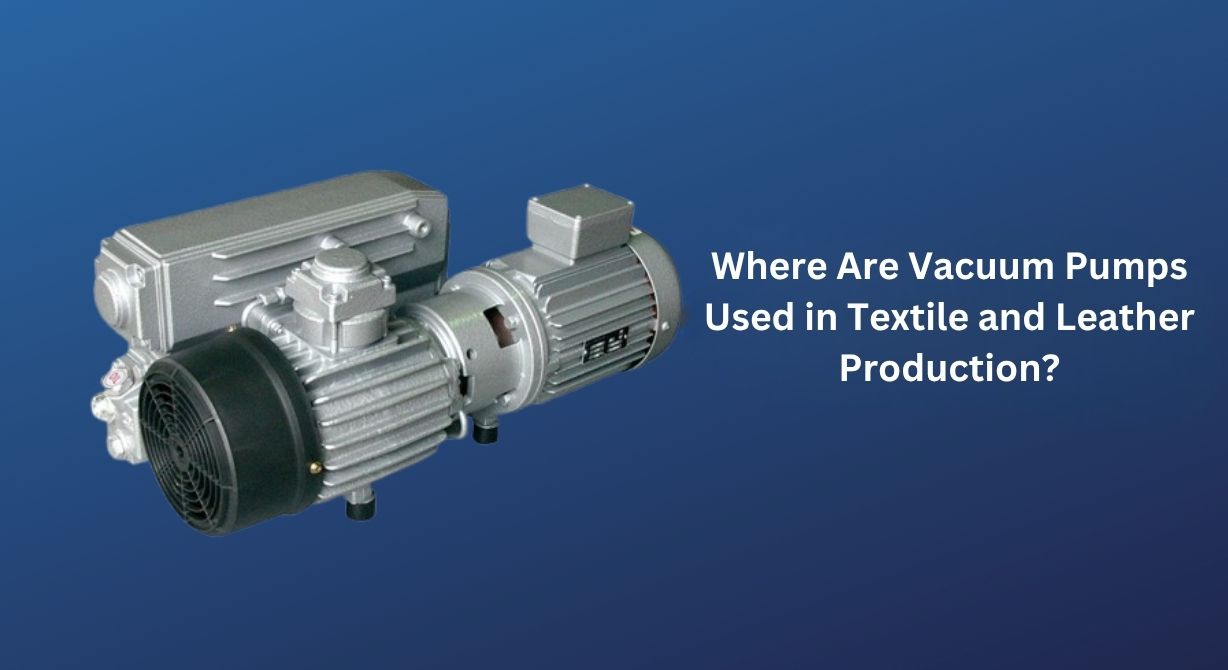
How Do Vacuum Drying Machines Work in the Leather Industry?
In leather processing, wet leather coming out of tanning and dyeing steps is treated with a standard piece of equipment known as a "vacuum dryer." In this machine, wet leather is laid flat on a heated metal platen; a flexible rubber blanket is then pulled down over it under vacuum, pressing the leather firmly against the heated plate.
During this process, the leather is flattened while moisture is quickly removed at low temperature, thanks to both the platen's heat and the reduced pressure the vacuum creates. Vacuum drying is a standard, widely used method in the leather industry.

What Advantages Does Vacuum Leather Drying Offer Over Traditional Drying?
Drying at low temperature under vacuum helps preserve the leather's natural structure and flexibility; prolonged drying at high temperature can cause leather to stiffen or crack. Vacuum drying also delivers results in a much shorter time than traditional hanging or toggle drying, and it flattens the leather's surface in the process.
Combining these two advantages — fast drying and surface flattening — in a single step is what has made vacuum dryers a standard part of modern leather processing lines.
Which Vacuum Pump Technology Is Preferred in Textile and Leather?
Both vacuum extraction on textile finishing lines and leather drying machines operate with a gas stream carrying significant water vapor; as covered in our article "How Is a Vacuum Pump Selected for Processes Involving Dense Vapor?", liquid ring vacuum pumps stand out as the natural choice for these applications. Textiles and leather are both among the sectors Gücüm Pompa serves.
The exact capacity and vacuum level required vary depending on line speed, fabric or leather width, and the amount of water that needs removing; model selection should therefore be made on a project-by-project basis, by sharing process data with Gücüm Pompa's technical team.
Frequently Asked Questions
Can Vacuum Extraction Damage Fabric?
A correctly designed system operating at the right vacuum level removes water without damaging the fabric. Excessively high vacuum or incorrectly sized equipment can cause deformation on delicate fabrics, so system design should be matched to the fabric type.
Is Vacuum De-Aeration Required for Every Dyeing Process?
De-aeration is particularly important for light shades and jobs requiring tight color tolerance; for darker shades or more forgiving tolerances, this step isn't always essential. The exact need depends on the dyeing recipe and machine used.
How Long Does Vacuum Leather Drying Take?
Duration varies depending on leather thickness, moisture content, and the machine's heating capacity; however, vacuum drying generally delivers results in a notably shorter time than traditional hanging-type drying.
Is the Same Pump Model Used for Textile and Leather Applications?
No. While liquid ring pump technology is generally suitable for both industries, exact model selection varies project by project, based on the line's capacity, target vacuum level, and vapor load.
