


The Impact of Vacuum Pumps on Hygiene Standards in the Food Processing Industry
Selecting a vacuum system for food processing requires consideration of hygiene and contamination risks as well as production performance. Pump maintenance, process-contact equipment, service liquid and exhaust management must be assessed together. Required materials and compliance documents depend on the application.
Table Of Contents
- What Do Vacuum Pumps in the Food Processing Industry Do?
- Which Type of Vacuum Pumps Should Be Preferred to Meet Hygiene Standards in Food Production?
- How Do Vacuum Pumps Support Cleanliness and Hygiene Standards?
- What is the Importance of Hygienic Vacuum Pumps in Food Processing Stages?
- How to Use Vacuum Pumps to Reduce Critical Contamination Risks in Food Production?
- What are the Most Ideal Vacuum Pumps for Hygienic Production in the Food Processing Industry?
- How to Improve the Quality of Food Processing Products with Vacuum Pumps?
- Which Vacuum Pump Features Are Important to Ensure Hygiene Standards in Food Production Facilities?
What Do Vacuum Pumps in the Food Processing Industry Do?
In food processing plants, vacuum pumps remove air and vapour from lines in various processes. The main applications are:
- Vacuum packaging and modified atmosphere (MAP) packaging machines.
- Filling and dosing lines.
- Vacuum drying and freeze-drying (lyophilisation).
- Vacuum cooling and deaeration.
- Mixing, marinating and evaporation (concentration by evaporation) under vacuum.
In most applications vacuum pumps do not come into direct contact with the food; what matters most for hygiene is selecting and operating the pump so that oil, moisture or particles do not pass from the line to the food.
Which Type of Vacuum Pumps Should Be Preferred to Meet Hygiene Standards in Food Production?
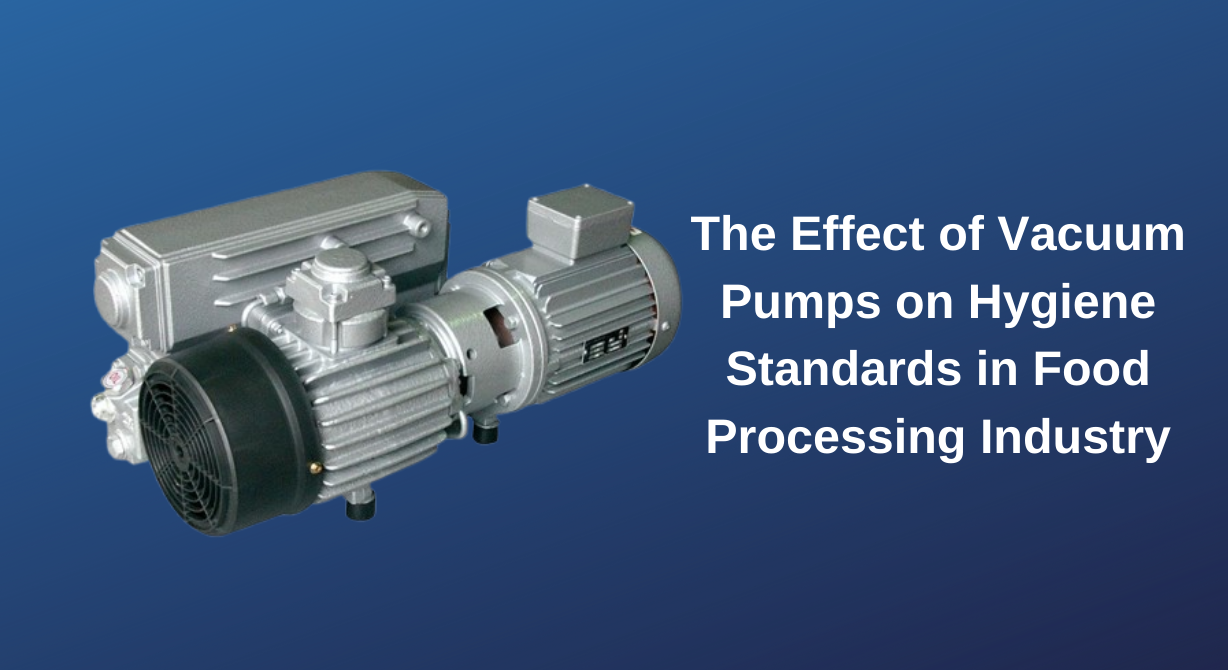
The suitable pump type depends on the gas and vapour content of the process, the vacuum level required and the plant's hygiene requirements:
- Dry (oil-free) vacuum pump: Since there is no oil in the working chamber, there is no risk of oil vapour reaching the process; it is preferred on lines where oil contamination is unwanted.
- Liquid ring vacuum pump: Suitable for humid and vapour-laden gas streams; the quality and recirculation of the operating liquid (usually water) should be monitored for hygiene.
- Oil-lubricated rotary vane vacuum pump: Widely used in applications such as packaging; it should be considered together with food-grade oil, an oil mist separator and regular oil changes.
Pump selection should be based on the requirements of your food safety management system and the applicable regulations. The Gücüm Pompa technical team can support you in determining the pump type suited to your process.
How Do Vacuum Pumps Support Cleanliness and Hygiene Standards?
A vacuum pump supports hygiene standards through the choice of the right type and correct installation:
- Oil-free pumps are an option aimed at eliminating the risk of oil-related contamination.
- Closed vacuum lines help reduce open handling of food.
- Tight pump and line connections limit the entry of outside air and dirt into the line.
- A pump whose exterior and surroundings can be cleaned makes it easier to fit the plant's cleaning programme.
The extent of these contributions depends on the pump type, the installation location and the cleaning procedures.

What is the Importance of Hygienic Vacuum Pumps in Food Processing Stages?
In food production, hygiene is a fundamental part of product safety. Even if the vacuum pump does not contact the product directly, elements such as oil vapour, condensate or particles that could travel back into the line can pose a risk to the production line.
For this reason, the pump should be protected from the product line with a separator, filter or non-return valve, included in the equipment assessment of your food safety management system (e.g. HACCP), and subject to planned maintenance.
How to Use Vacuum Pumps to Reduce Critical Contamination Risks in Food Production?
The main contamination risks in lines with vacuum pumps, and the measures that can be taken, are:
- Oil vapour back-streaming: Selecting an oil-free pump, or fitting a back-streaming preventer at the inlet of an oil-lubricated pump.
- Product particles and liquid ingress: Using a separator and filter at the pump inlet; this also protects the pump.
- Condensate and operating water: Monitoring the quality and recirculation of the operating water on liquid ring pumps.
- Exhaust air: Passing the exhaust of oil-lubricated pumps through an oil mist separator and routing it to a suitable location.
- Contamination during maintenance: Carrying out maintenance and oil changes outside the production area or in line with hygiene procedures.
To determine the measures specific to your process, you can contact the Gücüm Pompa technical team.
What are the Most Ideal Vacuum Pumps for Hygienic Production in the Food Processing Industry?
There is no single "most ideal" pump for every process; the most suitable type varies with the characteristics of the process:
- Packaging and filling lines: Oil-lubricated rotary vane or dry pumps are generally used on clean, dry air lines; where hygiene sensitivity is high, the oil-free type stands out.
- Humid and vapour-laden processes (evaporation, vacuum cooling): Liquid ring pumps may be suitable.
- Drying and freeze-drying: The pump type is determined by considering the low pressure required and the vapour load.
Selection should be made according to pumping speed (m3/h), ultimate pressure (mbar), process gas and cleanliness requirement.
How to Improve the Quality of Food Processing Products with Vacuum Pumps?
Vacuum helps reduce the amount of oxygen inside the package or in the process environment of food products. Less oxygen slows oxidation, which can contribute to preserving colour, flavour and nutritional value and to extending the shelf life of the product.
Processes such as vacuum drying and cooling, on the other hand, allow temperature-sensitive products to be processed at lower temperatures. The quality gain that can be achieved depends on the product, the packaging and the process.
Which Vacuum Pump Features Are Important to Ensure Hygiene Standards in Food Production Facilities?
When selecting a vacuum pump for facilities with hygiene requirements, the following features should be considered:
- An oil-free operation option, or an oil mist separator/filter arrangement.
- Protection and surface construction suitable for wash-down and cleaning environments.
- Tight connections and suitable seals.
- A design that allows a separator and filter to be used at the pump inlet.
- Ease of maintenance, spare parts and service support.
If a part in contact with the product is involved, the suitability of the relevant material for food contact must be documented separately. The Gücüm Pompa technical team can support you in selecting a pump that fits your facility's requirements.
